Butler Chain of Lakes Dock Rights: Riparian Permitting & Shoreline Rules
⚡ Quick Summary
- The Core Rule: Direct riparian ownership on the Butler Chain of Lakes does not automatically guarantee dock rights; its strict Outstanding Florida Waterbody (OFW) environmental designation requires multi-agency approval from the Orange County EPD, the Windermere Water and Navigation Control District (WWNCD), and the South Florida Water Management District (SFWMD).
- The Financials & Logistics: Constructing a new private dock averages $40,000 to $80,000 in hard costs and requires a 12-to-18-month permitting window, dictated by Orange County Chapter 15, Article IX zoning laws which cap terminal platforms at 1,000 square feet and limit maximum length to 65 feet from the Normal High Water Elevation shoreline.
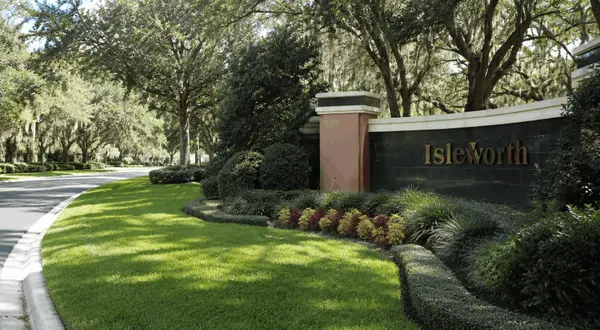
- The Deal-Killer: Deeded SFWMD Conservation Easements permanently render a shoreline non-dockable, while narrow lots under 75 feet of frontage often violate mandatory 10-foot side setbacks—meaning luxury buyers in enclaves like Isleworth or Keene's Pointe purchasing "as-is" risk inheriting unpermitted jet ski platforms facing mandatory county code enforcement demolition.
In my experience guiding buyers through waterfront acquisitions on the Butler Chain of Lakes, the single most expensive mistake I see is assuming that a listing described as "lakefront" or "waterfront" automatically includes the legal right to build and maintain a private dock.
It does not — and the difference between a dockable and a non-dockable shoreline can represent $300,000 to $3,000,000 in value, depending on the lake and the lot.
This guide is designed to give you the decision architecture you need before you make an offer. We will walk through legal access classifications, real permitting costs, Orange County code specifics, and four real-world deal scenarios that collapsed because buyers skipped these steps.
What Are the Legal Lake Access Classifications on the Butler Chain?
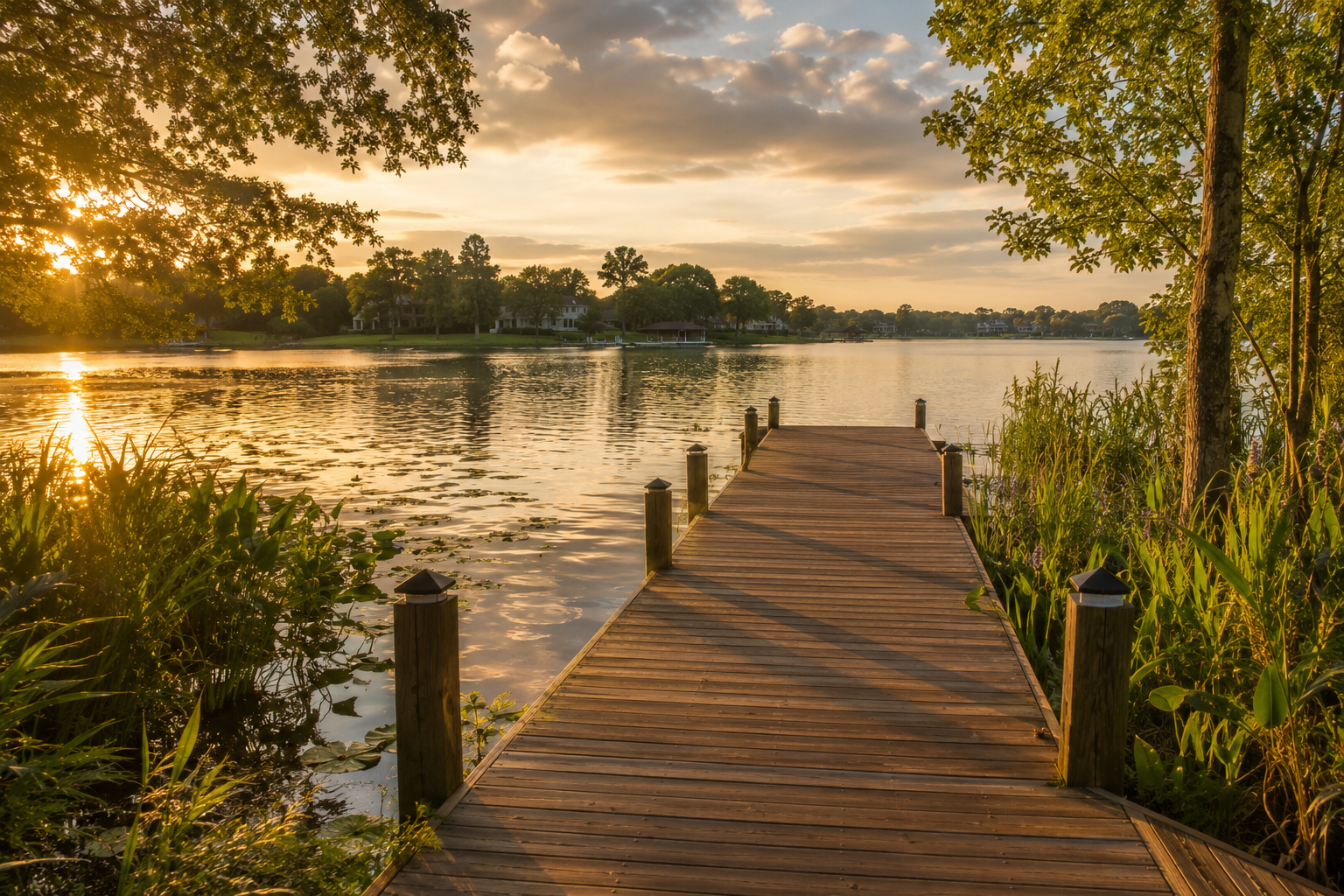
Lake access on the Butler Chain falls into three legally distinct categories: direct riparian ownership (where your lot touches the water and you hold deeded riparian rights), shared community easement access (where an HOA or subdivision plat grants access to a common shoreline), and no legal water access (interior lots that are marketed near, but not on, the water). Only direct riparian ownership reliably supports a private dock permit application under Orange County code.
How Does the Outstanding Florida Waterbody Designation Affect My Lot?
The Butler Chain of Lakes carries an Outstanding Florida Waterbody (OFW) designation, which is the highest environmental protection tier the State of Florida assigns to a navigable waterway. This designation mandates a minimum lot size of one full acre for all new residential parcels fronting the chain and requires strict stormwater runoff controls — rules that do not apply to properties on connected man-made canals or adjacent landlocked basins.
Butler Chain Dock Permitting & Riparian Standards
| Regulatory Parameter | Orange County EPD Baseline Rule | Waterfront Equity Impact |
|---|---|---|
| Terminal Platform Maximum Area | 1,000 sq. ft. max (for standard 100'+ shoreline) | Supports covered dual boat slips & personal watercraft lifts. |
| Side Riparian Setback Buffer | 10 ft minimum from extended property lines | Narrow parcels (<75' shoreline) may limit covered roof footprints. |
| Canal Extension Restriction | Cannot exceed 25% of total canal width | Ensures navigable channel access while regulating dock depth. |
What Does a New Private Dock Actually Cost to Build?
Constructing a new private dock on the Butler Chain carries an average hard-cost range of $40,000 to $80,000 in materials and labor alone, and the permitting process routinely adds 12 to 18 months to the timeline before a single piling is driven. On smaller, non-chain lakes in the Sand Lake corridor, comparable dock construction runs $25,000 to $50,000, with faster regulatory review cycles.
- Permit applications require simultaneous review by Orange County EPD, the Windermere Water and Navigation Control District (WWNCD), and in many cases the South Florida Water Management District (SFWMD).
- Terminal platform size is capped at 1,000 square feet under Orange County Chapter 15, Article IX. Exceeding this requires a formal variance — which the county routinely denies without documented physical hardship.
- Maximum dock length is 65 feet measured from the Normal High Water Elevation shoreline. Anything longer requires an environmental variance.
- Side setbacks require 10 feet of clearance from projected property lines on lots with 75 or more feet of frontage. Narrow lots under 75 feet face the same 10-foot rule, which frequently triggers variance requests — and neighbor objections that kill them.
What Is the Windermere Water and Navigation Control District?
The Windermere Water and Navigation Control District (WWNCD) is a special-purpose taxing district established under Florida law to regulate lake levels, dredge canals, manage boating safety, and control shoreline structures across the Butler Chain system. The district levies an ad valorem tax of up to 1 mill on properties within its boundaries.
How Much Shoreline Can I Clear Without a Permit?
Orange County allows homeowners to maintain a vegetation-free access corridor of 30 feet — or 20 percent of their total shoreline frontage, whichever is greater — without an environmental permit. Any clearing outside that designated corridor requires a Lakeshore Protection Permit from the county Environmental Protection Division.
What Are the Boating Speed Rules on the Butler Chain?
The general posted speed limit across the Butler Chain is 40 miles per hour during daylight hours and 20 miles per hour between dusk and dawn. A strict idle-speed, no-wake rule is enforced within 100 feet of any shoreline, dock structure, or other vessel.
Are Floating Jet Ski Platforms Permitted?
Floating jet ski platforms and lifts are legally classified as dock accessory structures under Orange County code. This means they are subject to the same permitting requirements as the dock itself and are included in the overall square footage calculation for the terminal platform. Unpermitted jet ski platforms — even those that were present at the time of purchase — can trigger code enforcement violations that the new owner is responsible for resolving.
Conservation Easement vs. Conservation Area
A Conservation Area is a land classification that appears on county environmental maps; it signals sensitivity but does not by itself restrict what a property owner can do. A Conservation Easement is a legally binding deed restriction that permanently prohibits clearing, shoreline access corridor establishment, and structural development within its boundaries. A lot encumbered by a Conservation Easement is legally non-dockable, full stop.
What Are Sovereign Submerged Lands?
Sovereign Submerged Lands (SSL) are the bottomlands beneath navigable waterways, which are owned by the State of Florida rather than by adjacent private landowners. If a proposed dock would encroach on SSL, a separate state authorization layer is added to an already multi-agency permitting process.
Four Real Deals That Failed — and What Each Buyer Missed
1. The Non-Dockable "Waterfront" Lot on Lake Butler
A buyer contracted on a vacant lot with plans to build a custom boathouse. The buyer's agent failed to review an existing SFWMD conservation easement recorded in the deed chain. After closing, the permit was denied: the entire shoreline was encumbered, prohibiting any clearing or access. The owner was left with a water-facing lot and no legal path to a dock.
2. The Unpermitted Dock Trap in Isleworth
A buyer acquired a multi-million dollar Isleworth estate with an expansive dock and jet ski platforms marketed "as-is." Post-closing, Orange County issued a notice of violation. The original dock was permitted, but the jet ski platforms were added illegally, pushing the total square footage past the county maximum. The new owner was forced to demolish the additions at their own expense.
3. The Setback Problem on Lake Tibet
A buyer intended to demolish an older home on Lake Tibet and build a new custom dock. A boundary survey revealed the lot's projected property lines converged sharply into the water. With frontage under 75 feet, the mandatory 10-foot side setbacks made it geometrically impossible to build a legal dock. A variance was denied due to neighbor objections, and the deal collapsed.
4. The IB Magnet Window That Closed
An out-of-state executive closed on a Dr. Phillips home in July to place their child in the Dr. Phillips High School IB magnet program. They learned post-closing that the magnet application window had closed the prior March. School assignment deadlines in Orange County Public Schools are fixed; buyers must verify enrollment calendars, not just attendance zones.
What Does Lakefront Ownership Actually Cost to Carry Each Year?
Beyond the purchase price, direct waterfront ownership on the Butler Chain generates a distinct set of annual carrying costs that interior properties do not face.
- WWNCD tax: Up to 1 mill on assessed value annually.
- Dock maintenance: Structural repairs on aging wood or composite systems average $8,000 to $25,000 per event.
- Shoreline vegetation management: Annual licensed aquatic vegetation control runs $1,500 to $4,000 per year.
- Flood insurance: Adding $3,000 to $12,000+ annually depending on elevation certificate results.
- HOA dues by community: Keene's Pointe runs $283 to $298/mo for base neighborhood fees. Isleworth carries $553 to $2,370/mo.
What Is the Price Premium for Direct Butler Chain Frontage?
Direct lakefront properties on the Butler Chain trade at a median premium of approximately 128.6 percent over interior, non-waterfront homes in Windermere — a metric parsed thoroughly in our Butler Chain resale premium analysis showing a median waterfront price point near $3.6 million versus a Windermere interior median near $710,000.
Is There Public Boat Access to the Butler Chain?
The Town of Windermere operates resident-only boat ramps. The Orange County Sportsmen's Association (OCSA) maintains a private ramp on Lake Sheen that requires a paid membership — and carries a waitlist that routinely exceeds five years. For buyers who do not own a direct-access lakefront lot, there is no reliable public launch point on the Butler Chain.
Due Diligence Checklist Before You Make an Offer
Secure Your Waterfront Representation
Don't risk a multi-million dollar acquisition on unvetted shoreline rights. Let's pull the plat maps, verify the easements, and clear the permitting history before you write an offer.
Direct Strategy Line: (917) 743-8865
Frequently Asked Questions
What is the maximum dock length allowed on the Butler Chain of Lakes?
Orange County code limits private docks to a maximum length of 65 feet measured from the Normal High Water Elevation shoreline. Extending a dock beyond 65 feet requires an environmental variance from the Orange County Environmental Protection Division, which is typically approved only when the extension is necessary to reach navigable water depth.
How much shoreline vegetation can I clear without a permit in Orange County, Florida?
Orange County allows homeowners to clear a vegetation-free access corridor of 30 feet or 20 percent of their total shoreline frontage, whichever is greater, without an environmental permit. Any vegetation removal outside this corridor requires a Lakeshore Protection Permit from the Orange County Environmental Protection Division.
What does it cost to build a new dock on the Butler Chain of Lakes?
New private dock construction on the Butler Chain of Lakes costs an average of $40,000 to $80,000 in hard construction costs, with a permitting and approval timeline of 12 to 18 months. These costs and timelines are driven by the chain's Outstanding Florida Waterbody designation.
What is the difference between a Conservation Easement and a Conservation Area on the Butler Chain?
A Conservation Area is an environmental land classification shown on county maps that signals ecological sensitivity. A Conservation Easement is a legally binding deed restriction, typically held by an agency such as the South Florida Water Management District, that permanently prohibits clearing and structural development — including dock construction — within its boundaries.
Are there public boat ramps on the Butler Chain of Lakes for non-residents?
The Town of Windermere operates resident-only boat ramps. The Orange County Sportsmen's Association provides a private ramp on Lake Sheen that requires a paid membership with a waitlist that commonly exceeds five years. There are no reliable public launch points on the Butler Chain accessible to non-residents without membership.
Yousef Zeidan
Luxury Right-Sizing, Downsizing, and Tax-Sensitive Relocation Specialist
Specializing in luxury right-sizing, downsizing, and tax-sensitive relocation in Dr. Phillips, Windermere, and the Butler Chain of Lakes.
- Brokerage: RE/MAX Prime Properties
- License ID: SL3520428
- Phone: +1 (917) 743-8865
- Email: yousef@floridalistings.io
- Office Address: 2713 St Armand Ct, Orlando, FL 32835, USA
Categories
Recent Posts




Request Your Confidential Risk Audit