
Golf Community vs. Low HOA in Dr. Phillips: The 10-Year Empty Nester Cost Audit
⚡ Quick Summary
- The Core Choice: Evaluating a move within Dr. Phillips requires balancing long-term capital preservation against immediate lifestyle utility, distinguishing premier golf enclaves like Bay Hill and Orange Tree (gated security, staffed infrastructure, and social dividends) from autonomous, low-HOA subdivisions.
- The Financials: A rigorous 10-year cost projection reveals a massive equity delta; low-HOA tracks carry a predictable $12,000 to $18,000 decade-long commitment, while comprehensive golf club memberships scale aggressively from $102,000 to $216,000+, creating a $100,000+ cash flow variance that empty nesters frequently redirect to finance a lock-and-leave snowbird lifestyle.
- The Risk & Logistics: As macro-market inventory lingers longer into 2026, highly accessible single-story ranch layouts maintain the highest resale velocity, though buyers must proactively audit localized Orange County Property Appraiser tax assessments, rising Florida insurance baselines, and stricter structural reserve mandates to protect their final net equity.
The HOA Comparison: Lifestyle vs. Liquidity
- ⛳ Golf Communities: Best for social immersion & security (Bay Hill, Orange Tree).
- 📉 Low-HOA Zones: Best for fixed-income predictability and autonomy.
- 🛡️ Assessment Risk: Newer gated communities face higher 2026 reserve requirements post-structural legislation.
- 🏠 Resale Edge: Single-story ranch homes in both categories hold the highest resale velocity.
The monthly carrying costs in premier equity setups can exceed $900, while nearby non-equity neighborhood tracks consistently sit under $150. However, the total cost-of-ownership gap isn't always as wide as it seems on raw spreadsheets. In 2026, many downsizers find that the "social dividend" of a structured country club environment completely justifies the carrying overhead, while other stakeholders intentionally harvest that $100,000+ financial delta to fully fund a low-maintenance snowbird lifestyle footprint.
The 10-Year Cost Projection: 2026 Financial Edition
Most home buyers only look at the monthly check written to the management firm. To successfully maintain long-term property equity, you must analyze how these association fees compound directly against Florida's structurally fluid insurance underwriting and tax evaluation landscapes.
Low-HOA Neighborhood Track
- Monthly Avg: $100 – $150
- Annual Accumulation: $1,200 – $1,800
- 10-Year Cumulative: $12k – $18k
Capital Focus: Private Individual Exterior
Premium Golf Community Enclave
- Monthly Avg: $850 – $1,800*
- Annual Accumulation: $10,200 – $21,600
- 10-Year Cumulative: $102k – $216k+
*Includes mandatory club/social elements
Capital Focus: Resort-Style Shared Infrastructure
Is Your Current Home Equity Being Maxed Out?
Transitioning from a high-fee legacy estate to a strategic, low-maintenance low-HOA property can instantly capture an extra $100,000+ in liquid cash flow over the next decade.
Request a Confidential Equity AuditGolf Community Living: The Social and Guard-Gated Security Premium
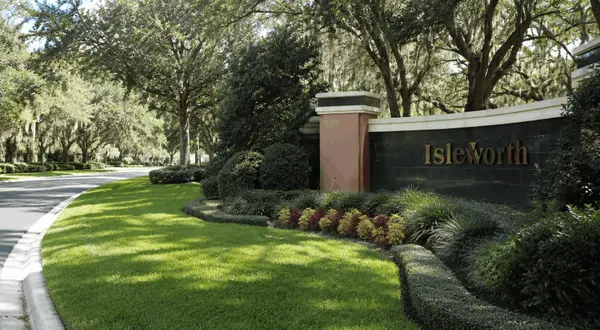
In established enclaves like Orange Tree or Bay Hill, your capital layout isn't restricted strictly to the manicured fairways. You are purchasing professional, staffed 24/7 gate structures and structured social calendars that facilitate deep local networking for empty nesters.
The Hidden Tax Assessment Variable
Luxury rightsizers must carefully cross-reference the active records of the official Orange County Property Appraiser (OCPA) to evaluate exactly how high-end common amenity valuations alter their specific, localized tax assessment baselines. You are taxed on your share of the luxury infrastructure.
Low-HOA Neighborhoods: Predictability in a Volatile Insurance Market
With regional homeowners insurance underwriting guidelines remaining structurally strict across the state, selecting a low-HOA neighborhood establishes a protective financial moat around your fixed monthly overhead. This carrying cost insulation is routinely more valuable to sophisticated Dr. Phillips downsizers than paying for shared commercial pools they rarely utilize. The clear trade-off to weigh is a minimized layer of collective enforcement regarding neighboring lot landscaping standards.
The Aging-in-Place Factor: Maximizing Layout Velocity
Regardless of your final community structure selection, real-time 2026 data emphasizes that single-story ranch layouts remain the undisputed velocity leaders across Southwest Orlando. With general metro inventory sitting longer on the market this year, downsizers carry immense leverage to demand clean structural inspections and modern roof wind-mitigation certificates — non-negotiable items to secure affordable property insurance coverage.
Strategist’s Note: The optimal financial move isn't automatically the property carrying the absolute lowest initial fee structure—it is the asset that aligns seamlessly with your long-term homestead tax portability strategy and capital exit timelines.
Frequently Asked Questions
How much are golf community HOA fees in Dr. Phillips?
In 2026, golf community dues in enclaves like Bay Hill or Orange Tree typically range from $850 to $1,800 per month when social or golf memberships are included. Non-club neighborhoods in Dr. Phillips often stay under $150 per month.
Are golf course homes in Orlando a good investment in 2026?
Golf course homes offer high 'social dividends' and security through staffed gates, maintaining strong resale velocity for downsizers. However, they carry higher carrying costs that can total over $200,000 in fees over a 10-year period.
Do low-HOA neighborhoods in Dr. Phillips have security?
Most low-HOA zones are non-gated, offering more autonomy but less collective security. For those prioritizing safety without high fees, some 'intermediate' gated communities offer a middle ground between luxury club living and standard suburban streets.
Which Path is Right for You?
Let's look at the off-market inventory in both golf and low-HOA categories across Dr. Phillips to map your exact 10-year carrying cost.
Yousef Zeidan
Luxury Right-Sizing, Downsizing, and Tax-Sensitive Relocation Specialist
Specializing in luxury right-sizing, downsizing, and tax-sensitive relocation in Dr. Phillips, Windermere, and the Butler Chain of Lakes.
- Brokerage: RE/MAX Prime Properties
- License ID: SL3520428
- Phone: +1 (917) 743-8865
- Email: yousef@floridalistings.io
- Office Address: 2713 St Armand Ct, Orlando, FL 32835, USA
Categories
Recent Posts


Request Your Confidential Risk Audit