
Should You Sell Your Orlando Home Now or Wait? (2026 Market Analysis)
💡 Quick Verdict: Sell Now or Wait?
In 2026, sell now if your property is in move-in condition, located in high-demand enclaves (such as Dr. Phillips or Winter Park), or carrying mounting holding liabilities (such as aging roofs, escalating property insurance, or multi-zone utility overhead). Wait if your estate requires essential structural repairs that you intend to complete first, or if your moving schedule allows you to absorb ongoing carrying costs for long-term lifestyle reasons. With regional inventory stabilizing at a 4-to-7 month supply, accurate pricing at launch is the key to maximizing net proceeds.
⚡ Quick Summary: The 2026 Market Equation
- The Inventory Shift: The Central Florida housing market has transitioned from pandemic-era bidding wars into a balanced, price-disciplined environment with a 4-to-7 month inventory supply and average sales closing at 97.5% of list price.
- The Holding Cost Reality: Waiting to sell is not cost-free. On an executive Orlando home valued at $1.5M+, monthly carrying costs—including property taxes, hazard insurance, and grounds maintenance—average $3,800 to $4,800 per month. A modest 2% to 4% annual appreciation rate rarely outpaces compounding holding friction.
- The Insurability Factor: Properties with roofs approaching or exceeding 15 years face severe underwriting pushback from private Florida insurance carriers on new purchase contracts. Completing a certified Wind Mitigation Inspection (Form OIR-B1-1802) or addressing mechanical systems prior to launch preserves contract velocity.
Quick Match: Submarket Absorption & Liquidity
- 📍 High-Velocity Core ($1M–$2M): Dr. Phillips (30–45 Days to Contract • Restaurant Row, $0 CDD)
- 🛡️ Bespoke Waterfront ($3M+): Windermere (60–120 Days to Contract • Butler Chain Estates)
- 🚶 Historic Walkable Demand: Winter Park (Park Avenue Core • High Cash Share)
- 🏥 Modern Master-Planned: Lake Nona (Medical City • Post-2020 Wind Credits)
Orlando’s real estate market in 2026 is no longer defined by bidding frenzies or unchecked annual appreciation. It has evolved into a balanced, highly discerning environment where inventory has stabilized, buyers conduct rigorous structural due diligence, and launch pricing accuracy dictates whether a property sells in 35 days or sits for four months. In advising high-equity homeowners across Southwest Orange County via The Diplomatic Advantage, the decision to sell now versus wait comes down to net financial math—not speculative market headlines.
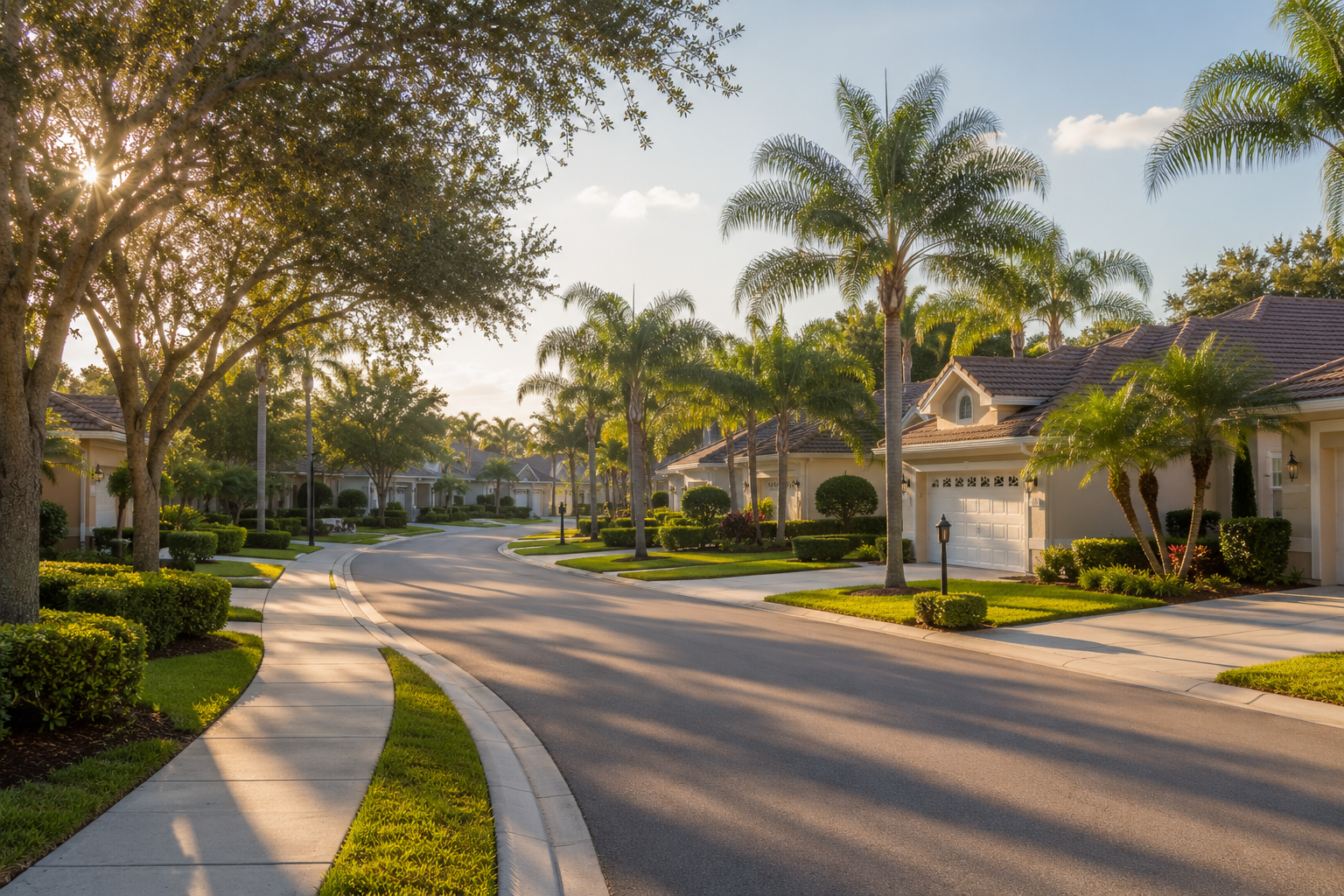
Sell Now in 2026 vs. Wait 1–3 Years: Comparative Analysis
| Decision Dimension | Sell Now in 2026 (Advantage / Reality) | Wait 1–3 Years (Holding Drag / Risk) | Net Financial Impact |
|---|---|---|---|
| Inventory Supply & Days on Market | 4–7 months supply; well-priced homes clear in 30–45 days | Rising new construction supply increases competition across Central Florida | Selling now captures current equity before builder incentives dilute resale pricing |
| Property Insurance & Roof Age | Current roof age grandfathered; buyers can bind coverage with 4-Point inspection | Roofs crossing 15 years face voluntary carrier denial under Florida underwriting rules | Waiting risks a mandatory $25k–$50k roof replacement before closing |
| Carrying Overhead & Taxes | Eliminates $3,800–$4,800/mo holding friction on an executive home | Annual ad valorem tax adjustments and rising commercial HOA assessments accumulate | Holding burns $45,000–$55,000/yr in non-recoverable carrying costs |
| Tax Cap Portability (Form DR-501T) | Port up to $500,000 of accumulated Save Our Homes assessment differential | Portability formula remains stable, but replacement home prices step up | Protects replacement home from Year 1 ad valorem reassessment step-up |
| Section 121 Capital Gains Exclusion | Exclude up to $500,000 in gains (married) / $250,000 (single) tax-free | Must maintain 2-of-prior-5-years primary residency requirement | Provides all-cash purchasing liquidity for downsized villa or secondary home |
The 2026 Market Reality: Normalization, Not Decline
The Orlando housing market has normalized from the extreme seller-dominated conditions of 2021–2022. According to data tracked by the Orlando Regional REALTOR® Association (ORRA), median single-family home prices across Central Florida are stabilizing, and the average sale-to-list price ratio sits at approximately 97.5%.
This does not mean the market is collapsing; rather, it means buyers are negotiating concessions, inspecting structural elements carefully, and rejecting aspirational list prices. Homes priced within 3% of comparable sales in prime communities like Dr. Phillips, Windermere, and Winter Park continue to clear in 30 to 45 days. Homes that enter the market overpriced sit for 80 to 110+ days and ultimately experience price cuts that exceed what an accurate Day 1 list price would have achieved. Examine market turnover patterns in our report on How Long It Takes to Sell a Luxury Home in Orlando.
The Compounding Cost of Waiting
A common justification for waiting is: "I’ll wait for home values to rise another 5%." On a $1.5M estate, a 5% gain equals $75,000. However, carrying that estate for an additional 18 to 24 months costs roughly $45,000 per year in property taxes, hazard insurance, pool and landscaping services, and maintenance—eroding $90,000 in liquid capital. Waiting for modest appreciation frequently produces a negative net financial return once real-world holding friction is accounted for. Review our detailed holding models in The Cost of Staying in a Large Orlando Home.
When Does It Make Sense to Wait?
While the financial math often favors liquidating an oversized estate to eliminate carrying drag, there are legitimate scenarios where waiting is the correct decision:
- Essential Pre-Listing Structural Repairs: If your estate has an active roof leak, outdated electrical service, or deferred pool marcite, listing immediately exposes you to aggressive buyer price reductions. Completing pre-listing remediation before marketing preserves listing momentum.
- Section 121 Holding Requirements: If you have not yet lived in the property for at least two of the past five years as your primary residence, waiting to cross the 24-month threshold unlocks the federal $500,000 capital gains exclusion ($250,000 for single filers).
- Unresolved Replacement Housing: If you are moving to a specific downsized neighborhood (such as a rare single-story villa in Dellagio or Vizcaya) with zero active inventory, structuring a private off-market search before listing prevents temporary displacement. Review our operational roadmap in Downsizing in Dr. Phillips: Carrying Cost & Equity Audit.

Transaction Friction: The Real Numbers Behind Selling
When evaluating whether to sell, homeowners must model their actual net proceeds. In Orange County, total seller transaction friction typically ranges between 7% and 10% of the gross contract price:
- Florida Documentary Stamp Tax on Deeds: $0.70 per $100 ($7,000 on a $1,000,000 sale).
- Title Search & Settlement Fees: $1,500 to $2,500 standard settlement fees.
- HOA Estoppel & Transfer Fees: $250 to $500 per association (compounds in dual-HOA communities).
- Professional Brokerage Commissions: Full representation, digital marketing syndication, and private network placement.
- Property Tax Proration: Prorated county ad valorem taxes calculated to the exact date of title transfer.
Save Our Homes Portability (Form DR-501T)
Florida homesteaders can port up to $500,000 of accumulated Save Our Homes cap differential to their next primary residence. When downsizing to a less expensive home, the benefit is calculated proportionally: (New Home Value / Old Home Value) × Accumulated Cap Differential. You have up to three tax years from January 1st of the abandonment year to file with the Orange County Property Appraiser before the statutory deadline. Review filing rules in our Florida Homestead Portability Guide.
How to Coordinate Selling and Buying Without Moving Twice
The greatest fear for homeowners contemplating a move is being displaced: selling their home before their replacement property is ready or being forced into a rushed purchase. We resolve this by negotiating a 30-to-60 day Post-Closing Occupancy Agreement (leaseback) directly into the sales contract.
This allows your sales proceeds to fund completely into escrow on closing day, providing full all-cash purchasing power for your replacement property, while granting you 30 to 60 days to remain in your home to complete a seamless, single-move transition. Learn how to stage and position your home for this transition in our guide to Staging a Dr. Phillips Home for Downsizer Buyers.
Search active residences across premier neighborhoods in our Dr. Phillips homes portal, explore luxury estates in Windermere, or review verified client feedback in our verified client reviews.
Ready to Map Your Real Estate Timeline?
Generic portals cannot compute real-time property health, tax portability carry-forwards, or localized pricing safety nets. Connect with Yousef Zeidan for an address-specific holding cost analysis and net walk-away equity model.
RE/MAX Prime Properties • License SL3520428 • Absolute Discretion
Frequently Asked Questions
Are buyers in Orlando still paying over list price in 2026?
A minority of sales in extreme high-demand micro-pockets close above list price, but the vast majority across the metro do not. Average sale-to-list ratios are hovering at approximately 97.5% across Central Florida. Sellers who price accurately at market parameters generate the most competitive initial contract terms.
How much carrying cost accumulates while waiting to sell?
On an executive estate valued at $1.5M+ in Southwest Orlando, ongoing holding costs—including ad valorem property taxes, hazard insurance, pool and grounds maintenance, and HOA dues—typically total $3,800 to $4,800 per month ($45,000–$55,000 annually). Waiting for modest market appreciation often produces a net financial loss once holding costs are factored in.
How does an older roof affect home sales in Florida?
Under Florida Statute 627.7011, existing homeowners are protected from policy non-renewals for roofs under 15 years old. However, on purchase transactions, voluntary admitted insurance carriers routinely reject new coverage for roofs past 15 years, preventing buyers from securing mortgage financing and causing escrow cancellations.
What happens to my Save Our Homes benefit when I downsize?
When downsizing to a replacement property of lower market value, Florida law prorates your Save Our Homes (SOH) cap proportionally: (New Home Value / Old Home Value) × Accumulated Cap Differential, up to $500,000 using Form DR-501T. You have up to three tax years from January 1st of the abandonment year to file with the county property appraiser.
How much capital gain can I exclude when selling my primary home?
Under IRC Section 121, married couples filing jointly can exclude up to $500,000 of net capital gain ($250,000 for single filers) from federal capital gains taxes, provided the property served as their primary residence for at least two of the five years preceding the sale date.
Yousef Zeidan
Luxury Right-Sizing, Downsizing, and Tax-Sensitive Relocation Specialist
Specializing in luxury right-sizing, downsizing, and tax-sensitive relocation in Dr. Phillips, Windermere, and the Butler Chain of Lakes.
- Brokerage: RE/MAX Prime Properties
- License ID: SL3520428
- Phone: +1 (917) 743-8865
- Email: yousef@floridalistings.io
- Office Address: 311 South Main Street, Winter Garden, FL 34787, USA
Categories
Recent Posts




Request Your Confidential Risk Audit