Walkable Areas in Orlando: Top 8 Neighborhoods Ranked
⚡ Quick Summary: Orlando Walkability at a Glance
- The Core Answer: Capitalizing on Orlando's "walkability premium" when downsizing requires micro-targeting specific blocks within distinct lifestyle districts, matching your layout needs to character-rich walking nodes like Winter Park (Park Ave) or transition-friendly master plans like Baldwin Park (Lake Baldwin Lane).
- The Logistics: True pedestrian utility in Central Florida usually means a 10-to-15-minute stroll rather than a completely car-free existence. This requires buyers to use precise parcel maps to audit block proximity and avoid overpaying for "drive-to" layouts in sprawling luxury sectors like Dr. Phillips (Restaurant Row).
- The Risk: Shifting into urban high-rises or legacy multi-family structures introduces heavy financial exposure to Florida structural integrity mandates (SB 4-D / SIRS) that spike monthly carrying costs for unvetted buildings, making fee-simple townhomes or inner-ring villas a safer choice for long-term equity insulation.
Quick Summary: Walkable Orlando Downsizing Nodes
- 🏘️ Top Choice for Character: Winter Park (Park Ave Node)
- 🌊 Best for Modern Planning: Baldwin Park (Lake Baldwin Lane)
- 🍽️ Best for Upscale Dining: Dr. Phillips (Restaurant Row Corridor)
- 🏢 Best for Urban Energy: Downtown / Thornton Park
Orlando doesn't have one walkable dining district — it has eight distinct pedestrian pockets. In 2026, as Orlando luxury right-sizing strategies accelerate, the "walkability premium" is becoming a primary driver of long-term equity insulation for empty nesters. Having overseen over $36M+ in closed transactions, I help families who are downsizing identify the specific blocks where lifestyle utility meets permanent liquidity.
Planning your transition? Request a custom walking-node layout audit for Dr. Phillips or Winter Park to evaluate block-level proximity before touring homes.
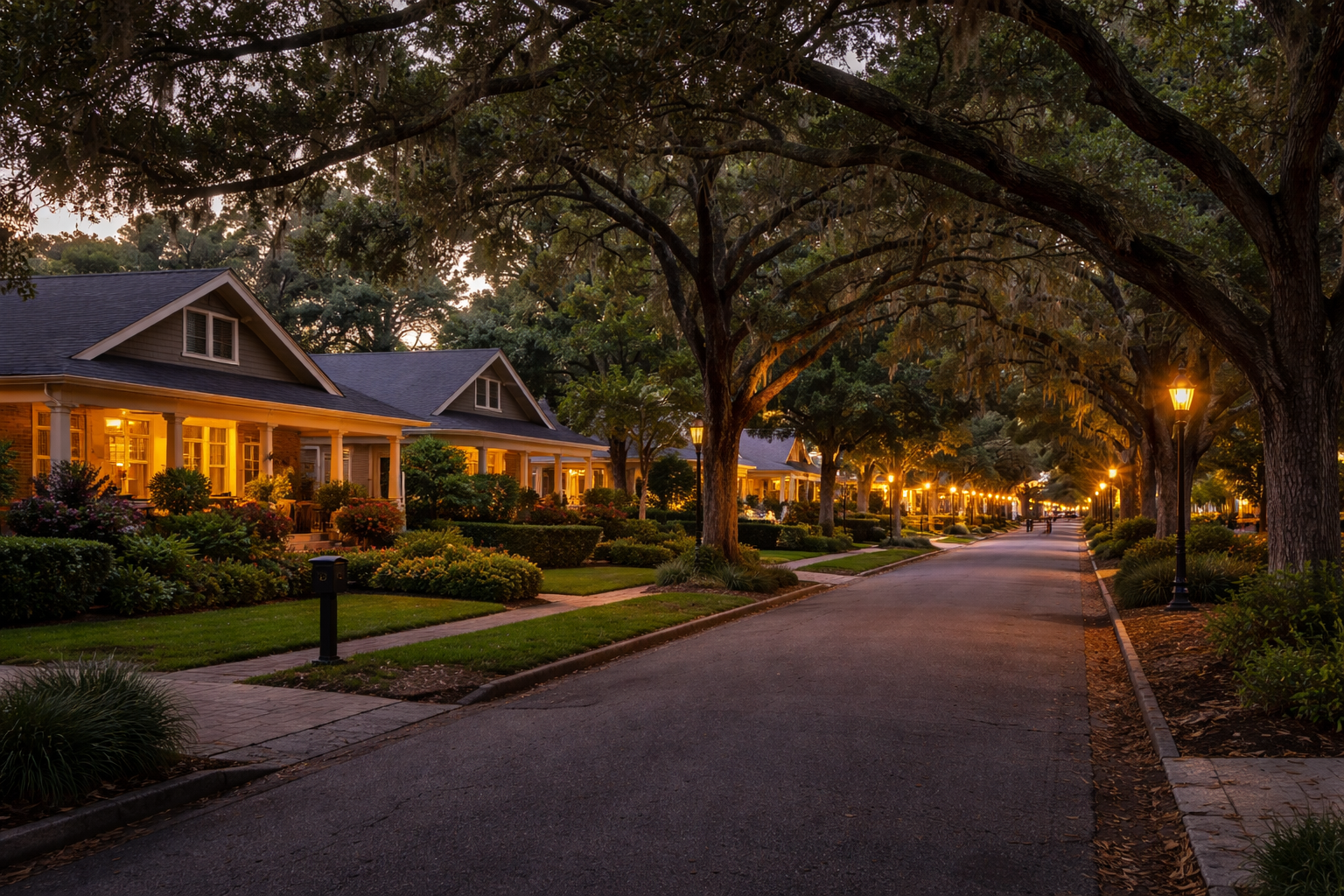
Ranking the 8 Most Walkable Suburbs and Neighborhoods in Orlando
For high-equity homeowners prioritizing walkable dining and simplified lifestyles, finding the right balance means evaluating premier walkable suburbs alongside established historic pockets. Success depends heavily on matching your exact layout parameters, privacy standards, and noise tolerances to these distinct pedestrian hubs.
The 8 most walkable neighborhoods and suburbs in Orlando ranked by Walk Score:
- Winter Park (Park Ave): Walk Score 88/100
- Downtown / Thornton Park: Walk Score 86/100
- Mills 50: Walk Score 82/100
- College Park (Edgewater Dr): Walk Score 79/100
- Baldwin Park (Lake Baldwin Ln): Walk Score 76/100
- Audubon Park: Walk Score 72/100
- Lake Nona (Town Center): Walk Score 58/100
- Dr. Phillips (Restaurant Row): Walk Score 52/100
Luxury Pedestrian & Private Pipeline Access Matrix
| Enclave Core | Pedestrian Dining Radius | Private School Pipeline | Carrying Cost Profile |
|---|---|---|---|
| Winter Park (Park Ave) | Immediate (0–5 Min Walk) | Trinity Prep / Lake Highland | High Resale Linearity ($0 CDD) |
| Dr. Phillips (Dellagio / Row) | Micro-Node (5–12 Min Walk) | Windermere Prep Pipeline | $0 CDD Bond Carry |
| Baldwin Park (Lake Baldwin Ln) | Direct Master Planned Core | Bishop Moore / Lake Highland | Fixed HOA / High Liquidity |
Winter Park
88 / 100Character: Fine Dining & European Bistros
Noise/Pacing: Moderate
Pulse: Highest Regional Prestige Core
Downtown / Thornton Park
86 / 100Character: Wine Bars & Casual Eateries
Noise/Pacing: High
Pulse: Condo SIRS Inventory Rising
Mills 50
82 / 100Character: Michelin-Recognized Asian & Fusion
Noise/Pacing: Moderate–High
Pulse: Strong Infill Development Focus
College Park
79 / 100Character: Chef-Driven Independent Cafes
Noise/Pacing: Low–Moderate
Pulse: Low Structural Single-Family Supply
Baldwin Park
76 / 100Character: Curated Upscale Lakefront Grills
Noise/Pacing: Low
Pulse: Stable Generational Asset Demand
Audubon Park
72 / 100Character: Artisanal Bakeries & Craft Breweries
Noise/Pacing: Low
Pulse: Historic Character Buffer Pockets
Lake Nona (Town Ctr)
58 / 100Character: Modern Infill Concept Kitchens
Noise/Pacing: Low
Dr. Phillips (Rest. Row)
52 / 100Character: High-End Steakhouses & Seafood
Noise/Pacing: Moderate
Reality Check: What 'Walkable' Actually Means in Orlando
In practice, Orlando's best walkable neighborhoods provide a 10–15 minute stroll to dining — not a completely car-free life. I always advise my downsizing clients to verify the structural parameters of a potential parcel using the official Orange County Property Appraiser (OCPA) map tool. It allows you to cross-reference property lines directly with adjacent retail centers to ensure you aren't paying an artificial premium for a home that is fundamentally car-dependent.
College Park and Baldwin Park: The Quiet-but-Walkable Case
These two districts represent the region's strongest combination of immediate restaurant access and true residential buffer zones. When weighing these locations against historic alternatives, exploring our detailed analysis on Winter Park vs. Dr. Phillips Estate Positioning provides additional clarity on long-term appreciation profiles. While demand remains highly insulated within these core footprints, buyers in 2026 are discovering slightly more transactional leverage. You can track ongoing pricing shifts and active single-family absorption baselines via the monthly Orlando Regional REALTOR® Association market data indexes.
Audubon Park and Mills 50: The Artisanal Infill Pockets
For buyers prioritizing independent, localized culture over master-planned aesthetic lines, Audubon Park and Mills 50 present compelling alternatives. Audubon Park is defined by low-turnover mid-century ranch configurations wrapping around artisanal community hubs, while Mills 50 holds a high concentration of Michelin-recognized casual dining spaces. Because these markets feature varying historical home updates, verifying the integrity of structural elements like roof age is essential to protect yourself against sudden property carrying cost spikes.
Downtown Orlando: Urban Energy and HOA Due Diligence
The Downtown core and neighboring Thornton Park deliver Orlando's highest density of urban pedestrian infrastructure. However, for those considering downsizing into high-rise residential options, I emphasize executing exhaustive due diligence on the association's long-term capital balances.
Recent Florida Senate building safety mandates (SB 4-D) have forced substantial special assessment adjustments across aging towers to comply with Structural Integrity Reserve Studies (SIRS). Part of my risk mitigation methodology includes a complete review of these reserve studies before finalizing transaction terms.
Dr. Phillips Walkability: Unpacking the Micro-Nodes
Because buyers are often misled by broad geographic definitions, it is critical to address the specific mechanics of walkability inside Dr. Phillips. Sprawling gated communities like Bay Hill or the outer phases of Phillips Landing are fundamentally "drive-to" destinations. If your goal when downsizing is true pedestrian convenience, you must center your property search around specific micro-nodes.
The absolute premier walking node in the submarket is clustered immediately adjacent to the Dellagio Town Center and the core of Restaurant Row along Sand Lake Road. High-end communities like Vizcaya (specifically properties hugging the inner corridors near The Esplanade) and specialized luxury villas allow residents to walk directly to a dense matrix of chef-driven concept dining, high-end grocers, and wellness options. This localized layout bypasses the traffic congestion loops of Sand Lake entirely.
Best of all, because these enclaves are situated in unincorporated Orange County, they carry a permanent financial advantage over adjacent cities by maintaining $0 in non-ad valorem CDD infrastructure bonds and low municipal carry variables.
The Decision Most Downsized Buyers Get Wrong
The biggest mistake? Selecting a neighborhood name on a portal rather than evaluating specific block-level infrastructure. Even within a highly walkable footprint, being just four blocks too far removed can quietly alter your daily lifestyle parameters. Furthermore, I always encourage downsizers to cross-verify local school boundaries; even if a local school system is no longer a personal daily operational factor, these lines serve as a permanent floor protecting your asset's future resale value.
Planning a Downsize to an Orlando Walkable Node?
Generic property portals cannot identify true block-level pedestrian utility, complex condo SIRS reserve shortfalls, or municipal tax differences. Review our complete guide to downsizing in Orlando, or request a custom walking-node audit for your target address.
RE/MAX Prime Properties · License SL3520428 · Absolute Discretion
Frequently Asked Questions
Which Orlando neighborhoods are most walkable for luxury downsizing?
Winter Park (hugging the historic Park Avenue core) and Baldwin Park (along Lake Baldwin Lane) offer the highest density of true pedestrian infrastructure. For high-end dining, the Restaurant Row micro-node adjacent to the Dellagio Town Center in Dr. Phillips provides immediate walking access to fine culinary options while maintaining a highly favorable tax structure ($0 CDD).
What hidden liabilities affect buyers downsizing into Orlando high-rise condos?
Under Florida Senate Bill 4-D safety rules, multi-story buildings must enforce strict Structural Integrity Reserve Studies (SIRS) and achieve full reserve funding milestones. Buying into an unvetted building with underfunded capital balances can expose rightsizing owners to abrupt, massive monthly HOA fee adjustments or steep special assessments.
Are there walkable neighborhoods in Dr. Phillips that bypass Sand Lake Road traffic?
True pedestrian utility in Dr. Phillips requires targeting specific properties directly within the inner-ring zones of Restaurant Row, such as the premium townhomes or lakefront corridors of Vizcaya. This placement grants direct walking access to high-end dining and grocers while enabling residents to avoid the vehicle bottlenecks of the main thoroughfares.
Yousef Zeidan
Luxury Right-Sizing, Downsizing, and Tax-Sensitive Relocation Specialist
Specializing in luxury right-sizing, downsizing, and tax-sensitive relocation in Dr. Phillips, Windermere, and the Butler Chain of Lakes.
- Brokerage: RE/MAX Prime Properties
- License ID: SL3520428
- Phone: +1 (917) 743-8865
- Email: yousef@floridalistings.io
- Office Address: 2713 St Armand Ct, Orlando, FL 32835, USA
Categories
Recent Posts



Request Your Confidential Risk Audit