
Why Isn't My Orlando Home Selling? Repositioning & Appraisal Audit
⚡ Quick Summary
- The Market Reality: Successfully navigating Orlando's balanced 2026 real estate climate requires acknowledging a shifting 54-to-83 median days on market (DOM) baseline where 67.1% of transactions clear below list price at a 97.5% sale-to-list ratio, revealing stark velocity boundaries between premium submarkets like Dr. Phillips (32819), Windermere, and buyer-favorable inventory expansion zones in Lake Nona.
- The Nuance: Resale properties face aggressive market deflection from national volume developers in growth tracts like Horizon West or Laureate Park offering incentivized 2-1 interest rate buydowns and closing credits, requiring established sellers to offset the difference by mapping a 7% to 8% total transaction friction stack.
- The Risk: Allowing a listing to linger past the critical 60-to-68 day behavioral threshold creates a permanent market stigma that invites predatory low-ball bids, a compounding danger if a property triggers late-stage mortgage underwriting denials due to failing a mandatory Florida 4-point inspection for architectural shingle roofs exceeding 15 years, polybutylene plumbing, or aluminum branch wiring.
If your Orlando home has been listed for more than 30 days without a serious offer, you are not alone — but you are also at a critical fork in the road. If you are executing a luxury downsizing move, the decisions you execute over the next two to four weeks will dictate whether your home moves at an optimal market price or quietly stagnates into an unvisited listing that buyers actively scroll past. The Orlando metro in 2026 averages 54 to 83 days on market depending on the specific submarket and price band, according to metrics compiled by the Orlando Regional REALTOR® Association (ORRA). That range matters enormously: homes in the right zip code, at the correct price, with precise presentation are still clearing in 30 to 50 days. The properties sitting past 68 days are doing so for highly identifiable, correctable structural errors.
In my experience working with sellers across Dr. Phillips, Lake Nona, and Windermere, the root cause is almost never an unresolvable mystery. It is invariably one — sometimes two — of seven diagnosable systemic challenges. This strategic guide details each problem, breaks down what the live 2026 data indicates, and outlines the explicit action steps needed to fix them and save your home's hard-earned equity assets.
1. Is Your Home Priced for the 2026 Market — or the 2022 Peak?
Overpricing remains the single most common reason an Orlando home fails to convert in 2026. As of early 2026, 67.1% of Orlando area properties are clearing under initial list price, with sellers capturing approximately 97.5 cents on the listed dollar. Buyers are evaluating your property against real-time, live MLS boundaries via mobile tracking — they identify an overpriced listing within seconds and move straight to the next option without requesting a tour.
The persistent MLS misconception among home sellers is that "there's always room to negotiate down." In a market where buyers are looking at four to seven months of available inventory in key corridors, that logic has broken down entirely. The accurately priced home wins the immediate showing window. The overpriced home generates digital impressions but zero physical tour requests, directly serving to help your immediate neighbors sell their property first.
The $500k Appraisal Trap & Stagnation Diagnostic Checklist
Is your asking price anchored to 2022–2023 peak comps? Today's financed and cash buyers benchmark rigorously against active inventory in Dr. Phillips and Windermere.
Is a roof over 15 years old raising insurance red flags? Buyers walk away when 4-point inspections reveal unmitigated underwriting obstacles.
Are executive buyers skipping your walkthroughs due to dated imagery or missing laser-measured architectural floor plans?
The Submarket Gap Zillow's Number Hides
Zillow highlights a centralized Orlando median home value index. While mathematically accurate, that macro figure blends vastly divergent submarkets into a single deceptive average. For families looking at downsizing their luxury home, the real variance across distinct neighborhoods tells a completely different story:
- Dr. Phillips (32819): Median luxury sale prices frequently hold well above $1,000,000 in premium master subdivisions; verified, market-clearing homes move steadily in 30–50 days.
- Lake Nona: Median sale prices fluctuate between $625,000 and $693,000; months of active supply sit at 6.71 — hovering at the outer boundary of a buyer-favoring environment for the first time since 2019.
- Windermere: Average list prices sit closer to $2,080,766; average days on market (DOM) approach roughly 70 days, with final sales processing roughly 5% under initial list.
- Osceola County / Davenport: Total inventory supply routinely surpasses 6 months; buyers wield maximum negotiating leverage, and DOM metrics regularly push past 90 days.
The unyielding pricing rule for 2026: utilize closed comparables from the past 60 to 90 days max. Data points from 2021 and 2022 are no longer contextually valid — using them sets a pricing baseline that live mortgage markets will not validate.
The $1.5M–$2.5M Dr. Phillips Warning
In advising luxury sellers in Bay Hill and Phillips Landing, the non-waterfront pocket between $1.5M and $2.5M is where aspirational overpricing causes the most severe equity damage. Overpriced listings in this targeted corridor are routinely languishing from 90 to 120+ days. Accurately calibrated luxury properties are changing hands within 45 to 60 days. Before pricing your property, check our real-time Instant Home Valuation tool or review our strategic breakdown on when is the best time to sell.
2. Are You Competing Against New Construction Unfairly?
In Orlando's high-growth perimeters — including Horizon West, Lake Nona's Laureate Park subdivision, and sections of the southern Osceola development tract — resale sellers are not merely competing with other neighborhood homeowners. They are matching up against national volume builders who are offering massive, aggressive structural concessions: 2-1 interest rate buydowns, full closing cost credits, specialized design center allowances, and complete luxury appliance packages that significantly lower a buyer's out-of-pocket monthly payment without altering the baseline headline price.
National builder tracking indicates that roughly 65% of large-scale developers have deployed direct financing incentives for consecutive months. The dynamic on the ground means a $500,000 new construction home with an executed 2-1 rate buydown drops a buyer's effective interest rate from 6.9% to 4.9% in year one, yielding a monthly payment roughly $600 lower than a standard resale property priced identically. For buyers operating at the absolute margin of payment qualification, that single line-item represents the entire deal.
Where Resale Holds the Line — and Where It Yields
- Resale advantage: Established enclaves in Dr. Phillips, Windermere, Winter Park, and College Park benefit from mature tree canopies, highly rated, stabilized school zones, and complete insulation from new builder land development. Buyers in these submarkets are purchasing the location specifically. Look over the trade-offs between character homes vs. new construction.
- New construction pressure: Horizon West, specific tracts of Laureate Park, and newer master-planned developments force resale sellers to either counter with equivalent concession structuring or accept a wider pricing discount to balance the financing differential.
The strategic fix: if your home sits in a pocket with active building expansion, introducing a dedicated closing credit or permanent rate buydown allocation is no longer an optional perk — it is a structural baseline needed to secure qualified buyer interest. Review how these strategies protect your equity via our carrying cost metrics resource.
3. Can Your Property Clear Florida's Mandatory Insurance Hurdles?
This is the single most underestimated transaction-killer in modern Florida real estate, and it's an operational reality that national real estate portals completely ignore. Homeowners insurance across Florida stands at extreme structural averages. While Orlando's inland location maintains a more stable local average compared to coastal lines, the underwriting trigger remains absolute: if a property fails a standard 4-point inspection, it becomes uninsurable, meaning institutional lenders cannot underwrite the mortgage and the contract collapses.
The 4-point inspection audits four primary operational components: roof status, electrical wiring infrastructure, structural HVAC components, and primary plumbing lines. Standard transactional blockers include architectural shingle roofs exceeding 15 years of age, aluminum branch wiring, polybutylene plumbing lines, or HVAC systems operating past their certified useful lifespan. When these structural deficiencies surface during the buyer's post-contract inspection window, transactions fall apart. The buyer exercises their contingency, walks away, and the seller reverts to day one on the market saddled with a newly disclosed structural material defect on record.
The Proactive Pre-Listing Correction
Ordering a preventative 4-point inspection costs roughly $200 to $350 and maps out every line-item a buyer's inspector will inevitably flag before it morphs into a contract crisis. Allocating capital to replace an aging roof can run between $12,000 and $25,000, but it completely opens up FHA and VA buyer pools, optimizes conventional insurance paths, and eliminates the single largest transactional collapse point in Central Florida. See how this maps against asset preservation on our guide concerning what hurts resale value in Dr. Phillips.
4. Is the Days-on-Market Clock Compounding Your Listing Stigma?
There is a specific behavioral threshold in the Central Florida housing ecosystem — hovering directly between 60 and 68 active calendar days — where market psychology swings aggressively. Prior to that threshold, incoming buyers ask: "Can we schedule a tour before it's gone?" Once a listing crosses that timeframe, the narrative shifts to: "What is structurally wrong with this property, and how low of an offer will they accept?" The listing takes on a visible market stigma, stops drawing conventional buyers, and begins attracting low-ball bids from buyers hunting for distressed assets.
Every active week logged past the 60-day line compounds financial losses along two specific paths: monthly carrying costs continue to drain equity, and the eventual price reduction required to reset market momentum must be significantly larger to pierce through the accumulated listing stigma. A seller who processes a strategic 2% adjustment on day 20 typically preserves more net equity than a seller who holds out and cuts by 5% on day 75. Examine these timelines closely on our luxury home days-on-market analysis.
5. Is Your Home Failing the Crucial Digital First Impression?
The initial 14 to 30 days of an active MLS campaign generate the absolute highest volume of web traffic and buyer filtering your property will ever see. Buyers tracking your exact price point and geographic radius will review your home during this critical window — and they formulate an immediate walkthrough decision based on your primary online feature image. Handheld mobile photos or poorly lit interiors are no longer simply a marketing downside; they are an automated filter blocker. True high-definition professional photography, precise laser floor plans, and interactive 3D virtual media tours represent the mandatory operational baseline in 2026.
- High digital impressions paired with low showing requests: This indicates an immediate positioning or pricing disconnect. Buyers are viewing the asset on screens, running the comparative neighborhood math, or viewing visual structural barriers, and selecting other tours instead.
- Extremely low digital impressions / flatline traffic: This points to an indexing or base search placement issue. Your list price is likely sitting just above standard consumer search filters (e.g., listing at $505,000 instead of $500,000), effectively hiding your property from target buyer feeds.
6. Is Your Micro School Zone Helping Your Valuation or Hurting Your Listing?
In Central Florida, public school tier boundaries are not minor background attributes — they serve as primary valuation engines, and the asset premium spread across individual streets can determine whether a home moves or sits. Properties verified within the immediate boundaries of the Dr. Phillips High School attendance zone (32819) maintain a documented premium over structurally equivalent homes located just across the street but assigned to an adjacent boundary layer. That specific premium has actually widened despite overall metro inventory shifts, fueled by executive, corporate, and specialized medical relocations moving into proximity with Sand Lake medical networks, universal complexes, and corporate offices.
Similarly, Lake Nona's school pipelines remain a primary lifestyle draw for incoming medical, clinical, and tech professionals transitioning to the Lake Nona Medical City tech hub. Read our hyper-local Orlando luxury community guide to see how school assignments impact value.
7. Are Hidden HOA Rules or Surprise Capital Fees Killing Contracts?
Complications stemming from homeowners association governance represent a top post-contract transaction collapse point in Central Florida. These issues almost always surprise sellers who fail to conduct a pre-listing audit of their own association's current rules and financial structures.
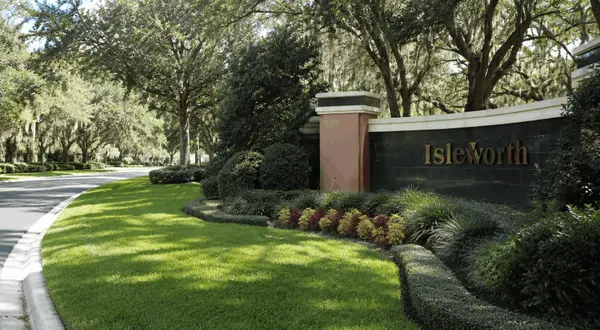
- Isles of Lake Nona: Collects a mandatory capital contribution fee alongside an association transfer fee at closing.
- Keene's Pointe (Windermere): Mandates a rigid buyer vetting and approval sequence that can span two to three weeks — an administrative timeline that can break transactions with relocating executives bound to strict moving deadlines.
- Dr. Phillips subdivisions: Gated developments routinely structure mandatory capital contribution assessments ranging between $1,500 and $5,000 that must be explicitly detailed upfront.
The proactive operational fix: request a formal HOA estoppel package and verify your association profile prior to listing. Confirm there are no open architectural control violations and confirm all dynamic fees are fully transparent. Look over our complete analysis of association overhead at CDD vs. HOA in Dr. Phillips.

What Does It Truly Cost to Sell an Orlando Home in 2026?
Calculating your exact net proceeds before confirming a final list price is a crucial financial step. Many Central Florida sellers underestimate total transaction friction by 2% to 3%, which distorts their baseline price positioning and compromises their negotiating path.
| Friction Point Line Item | Estimated Fee Structuring / Core Cost Metric |
|---|---|
| Florida Deed Documentary Stamp Tax | 0.70% of the final gross transaction value |
| Owner’s Title Insurance Policy | Scale-adjusted on base metro median values per state regulation |
| Settlement / Settlement Agent Fee | Standard local title agency closing execution baseline |
| Municipal Lien Certification Search | Approximately $150 (vital to verify unclosed permits) |
| Prorated Florida Property Taxes | Calculated based on current calendar fraction of the assessed value |
| HOA Estoppel Certification Letters | Ranges between $150 to $500 depending on management tiers |
| Master HOA Capital Transfer Fees | Uncapped across single-family tracts ($100 to $1,500+) |
| Listing & Cooperating Advisory Brokerage | Standard aligned brokerage allocation |
One operational line item sellers frequently overlook is the concession reserve. Offering selective closing credits of $5,000 to $10,000 has become standard practice across mid-to-high tiers in 2026. Review our extensive breakdown regarding transaction fees via our tax and closing cost framework analysis.
The Immediate 5-Step Action Checklist for Stalled Listings
If your listing has crossed the 30-day mark without an active, acceptable contract in hand, execute these five diagnostic steps in sequence:
Confidential Equity Audit & Strategic Consultation
Real estate transitions in Lake Nona, Dr. Phillips, and Windermere require navigating complex financial shifts with strategic precision. Let's diagnose your listing and unblock your sale.
Private Downsizing & Listing Recovery Strategy
Frequently Asked Questions
How long should a home stay on the market in Orlando before I worry?
Days on market for Orlando homes vary significantly by submarket, micro school gate, and price point. If your home has exceeded the median tracking baseline for your specific neighborhood and price band without a contract, you should conduct a comprehensive diagnostic review of your price positioning, structural condition, and digital presentation asset frameworks. Learn more about luxury home timelines here.
Should I reduce my price or offer closing cost credits instead?
Both represent highly valid options depending on your core operational bottleneck. A price reduction repositions your asset into entirely different digital search filters, restarting showing activity if structural overpricing is the root cause. Closing cost credits or 2-1 interest rate buydowns address direct buyer monthly affordability layout challenges without lowering the broadcasted list price milestone. Read up on our guide to how credits address payment affordability constraints.
Do older roofs and AC systems really affect my home's value in Orlando?
Yes, fundamentally. In Florida’s insurance climate, an aging roofing system or end-of-lifecycle HVAC layout triggers high premium additions or outright carrier underwriting denials. This often forces sellers to process steep list discounts or absorb unexpected roof replacements right in the middle of a transaction window. Review our detailed guide on the impact of older structural systems on home insurance compliance.
Should I take my home off the market and relist later?
Taking a property off the market can reset the 'days-on-market' counter, minimizing visible listing history signals to active buyers. However, relisting is only effective if you execute substantive, data-driven modifications to your price alignment or baseline presentation layout. Make sure to pair any re-listing with a fresh operational presentation strategy.
Is renting my Orlando home a better option than selling right now?
While Orlando maintains healthy rental demand, rising private insurance line items and recurring maintenance assessments can severely compress net landlord margins. The decision to convert your residence into a rental asset must be anchored in a conservative pro forma cash-flow model rather than gross rental projections alone. Run a financial model that accounts for tax resets and insurance spikes before deciding to maintain an unmanaged property footprint.
Yousef Zeidan
Luxury Right-Sizing, Downsizing, and Tax-Sensitive Relocation Specialist
Specializing in luxury right-sizing, downsizing, and tax-sensitive relocation in Dr. Phillips, Windermere, and the Butler Chain of Lakes.
- Brokerage: RE/MAX Prime Properties
- License ID: SL3520428
- Phone: +1 (917) 743-8865
- Email: yousef@floridalistings.io
- Office Address: 2713 St Armand Ct, Orlando, FL 32835, USA
Categories
Recent Posts




Request Your Confidential Risk Audit