Orlando Home Sale Tax Guide 2026: Protect Your Equity

by Yousef Zeidan

Florida charges no state income or capital gains tax. That part is true, and it matters. But it does not mean selling your Orlando home in 2026 is a tax-free event. Federal capital gains rules, Florida's documentary stamp tax, and the timing of your homestead and portability filings all affect how much money you actually keep. This guide walks through each layer so you can make informed decisions before you list, before you accept an offer, and before you close.

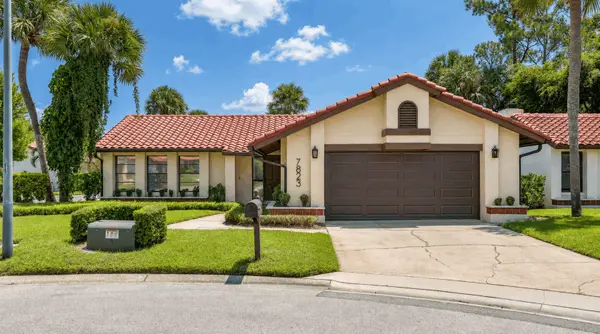
Orlando residential neighborhood with palm trees and well-maintained homes representing local housing market

Does Florida Tax Capital Gains When You Sell a Home?

Florida levies no state income tax and no state capital gains tax. When you sell a home in Orlando, the only capital gains exposure is federal. For 2026, long-term capital gains rates are 0%, 15%, or 20% depending on your total taxable income and filing status. Most Orlando move-up sellers land in the 15% bracket, but large luxury gains combined with other income can push a household into the 20% tier.

The 2026 federal thresholds are approximately:

Filing Status 0% Rate Up To 15% Rate Up To 20% Above
Single ~$49,450 ~$545,500 Above $545,500
Married Filing Jointly ~$98,900 ~$613,700 Above $613,700

These are your gain brackets not your sale price brackets. Your taxable income from all sources, including the gain, determines which rate applies. I always encourage my clients to run this number with their CPA before finalizing a listing strategy, because the difference between a 15% and 20% rate on a $400,000 gain is $20,000.

The Home Sale Exclusion: Who Qualifies and Who Doesn't

If you have owned and lived in your Orlando home as your primary residence for at least two of the last five years, you may exclude up to $250,000 of gain (single) or $500,000 (married filing jointly) from federal capital gains tax. You also cannot have claimed this exclusion on another home sold within the prior two years. For most long-term Orlando homeowners, this exclusion eliminates the federal tax burden entirely.

Where sellers run into trouble:

  • Mixed use periods. If you rented the home for any period, that portion of the gain may not qualify for the exclusion. Depreciation taken during rental periods also triggers a separate recapture tax, typically at 25%.
  • Large luxury gains. Homes held since the early 2010s in Orange County have often appreciated $400,000–$700,000 or more. Even with the full $500,000 exclusion, the excess gain is taxable.
  • Prior exclusion use. If you sold another home and claimed the exclusion within the past two years, you cannot use it again even if you otherwise qualify.

Verify your eligibility before listing. This is not a check-the-box decision; it is the single largest variable in your after-tax proceeds.

How to Calculate Your Capital Gain (Basis Matters More Than Most Sellers Realize)

Your taxable gain is the difference between your net sale proceeds and your adjusted basis. Basis is not just what you paid. It includes your original purchase price, closing costs from that purchase, and the cost of qualifying capital improvements made over your ownership period. Sellers who invest time in documenting improvements routinely find their taxable gain is significantly lower than their first estimate.

What counts as a capital improvement versus a repair matters:

  • Improvements (add to basis): Kitchen remodel, roof replacement, pool addition, HVAC system, room additions, hurricane windows, significant landscaping infrastructure.
  • Repairs (do not add to basis): Painting, fixing a leak, replacing a broken appliance, patching drywall.

Gather your original HUD-1 or closing disclosure, permit records, and contractor invoices before you list. Missing documentation forces conservative (higher tax) assumptions. In a luxury price range, a well-documented basis can reduce taxable gain by six figures. That is worth two hours of searching through old files.

Florida's Documentary Stamp Tax: The Closing Cost Orlando Sellers Often Underestimate

Florida charges a documentary stamp tax on real estate deed transfers at $0.70 per $100 of consideration or 0.7% of the sale price in Orange County and most Florida counties. This is a seller-paid cost at closing and one of the more significant line items that out-of-state owners frequently miss in their early net-proceeds projections. On a $1,000,000 sale, this alone is $7,000. On a $2,000,000 sale, it is $14,000.

Sale Price Documentary Stamp Tax (0.7%)
$500,000 $3,500
$750,000 $5,250
$1,000,000 $7,000
$2,000,000 $14,000

Documentary stamp tax is deductible as a selling expense when computing your capital gain, but it does not reduce the rate you pay. It reduces the net proceeds from which your gain is measured. Run this number early so your expected proceeds figure is accurate before you negotiate price.

Florida closing documents on a table representing the final steps of an Orlando home sale

Homestead Exemption and Save Our Homes Portability: The Tax Benefit Most Sellers Forget to Protect

If your Orlando home carries a Florida homestead exemption, you have likely accumulated years of Save Our Homes (SOH) benefit the difference between your property's market value and its capped assessed value. When you sell, that benefit does not transfer automatically. It requires a separate portability application filed with your county property appraiser, and there are strict timing rules. Missing this deadline creates permanently higher property taxes on your next home.

Key facts for 2026:

  • To receive homestead exemption for the 2026 tax year, you must have occupied the new property as your primary residence by January 1, 2026, and filed by March 2, 2026.
  • Portability must generally be applied for within three years of the year you abandoned the prior homestead but the application timing and the new homestead deadline must align.
  • The standard homestead exemption reduces your taxable assessed value by $50,000 (applied in two layers), saving most Orange County homeowners roughly $400–$750 per year depending on local millage.
  • SOH portability can transfer up to $500,000 of assessment reduction to a new Florida homestead compounding those savings on a move-up purchase.

My clients who move from one Orlando home to another and time this correctly carry meaningful assessment savings forward. Those who move without coordinating the filing lose that benefit permanently on the new property. If you are planning a sale in 2026, confirm your SOH balance and speak with your county property appraiser's office about portability eligibility before you finalize a closing date.

Selling a Second Home, Vacation Property, or Rental in Orlando

Investment and second properties do not qualify for the home sale exclusion, and capital gains on these sales are fully taxable at federal long-term rates. If the property was ever used as a rental, depreciation previously claimed must be recaptured at a rate of up to 25% regardless of how long you have owned it. This is a cost many sellers do not anticipate until they sit down with a CPA post-contract.

Investors considering a sale in 2026 should evaluate three options in parallel: outright sale, a 1031 exchange into a replacement investment property to defer gain, or a conversion of the property back to a primary residence (which requires meeting the two-year occupancy test before a future sale). Each option has different financial and timing implications, and the optimal path depends on your total income picture, Florida's lack of state tax, and how much depreciation has been claimed. This is a conversation to have with a tax advisor before you accept any offer not after.

Timing the Sale: 2026 vs. Waiting

The 2026 federal tax environment for home sellers is predictable and well-defined. The current brackets, the home sale exclusion, and the long-term capital gains rates at 0/15/20% are all in place. The risk of waiting is not that 2026 rates are especially favorable that future legislative changes are genuinely uncertain, and a 2027 or 2028 sale may occur in a different tax environment.

Practical timing factors that matter more than headline tax speculation:

  • Your income in the year of closing. If you have a bonus, business sale, or Roth conversion planned for 2026, pushing a home sale to 2027 may keep the gain in a lower bracket.
  • Homestead filing deadlines. If you are buying a replacement home, closing before year-end 2025 or early 2026 preserves your ability to file for the 2026 tax year.
  • Buyer financing conditions. Delays that push a closing from December into January move the gain into a different tax year sometimes to your benefit, sometimes not.
  • Accept a slightly lower price to close in 2026. In some cases, accepting a modestly lower offer that closes cleanly in 2026 produces a better after-tax outcome than a higher offer with extended contingencies that risks a January closing.

Couple reviewing financial documents at a kitchen table while planning an Orlando home sale timeline

How to Estimate Net Proceeds Before You List

A realistic net-proceeds estimate requires layering every cost in sequence. Start with your expected sale price, subtract the remaining mortgage payoff, subtract seller-paid closing costs (documentary stamp tax, title fees, commissions, prorated taxes, HOA estoppel fees), then calculate your capital gain separately by reducing the sale price by selling expenses and your adjusted basis. Apply the applicable exclusion, then apply the federal rate to the remaining gain. What is left is your estimated after-tax cash.

Sellers who run this calculation late after accepting an offer often face unwelcome surprises. I build this model with clients before we price a home, because net proceeds determine whether the move makes financial sense. The sale price is the headline. The number that drives decisions is what lands in your account after everything is settled.

A few costs that tend to surface late and affect the final number:

  • HOA transfer and estoppel fees (common in gated and master-planned communities; amounts vary by association)
  • Property tax prorations, particularly if a sale closes mid-year
  • Buyer repair credits negotiated after inspection, which reduce net proceeds without reducing the purchase price used for transfer tax
  • Documentary stamp tax on a new mortgage, paid by the buyer but occasionally a point of negotiation

What to Do Before You List: A Pre-Tax Planning Checklist

Most tax-planning options close once you accept a contract. The decisions that protect your net proceeds happen in the weeks before listing. Run through these before your home goes on market:

  1. Confirm your exclusion eligibility. Verify ownership and residency dates, prior exclusion use, and any rental or business use that may affect your qualifying period.
  2. Reconstruct your basis. Gather original closing statements, contractor invoices, permit records, and prior tax returns showing depreciation if applicable.
  3. Project your 2026 total taxable income. Include salary, business income, investment income, and the expected capital gain (net of exclusion) to determine your bracket.
  4. Review homestead and portability status. Confirm your current SOH benefit balance and understand the deadlines for transferring it to a replacement property.
  5. Consider closing-year strategy. Decide whether a 2026 or 2027 closing serves you better given your income picture and legislative uncertainty.
  6. Engage a CPA before listing, not after closing. A qualified tax professional can model installment sale structures, income-timing strategies, and bracket management before the contract is signed.

Frequently Asked Questions

Does Florida charge state capital gains tax when selling a house in 2026?

No. Florida levies no state income tax or state capital gains tax. Federal capital gains tax fully applies, and the rates for 2026 are 0%, 15%, or 20% based on your total taxable income and filing status.

How does the $250,000/$500,000 home sale exclusion work?

If you have owned and lived in your primary residence for at least two of the last five years and have not claimed the exclusion on another sale in the prior two years, you may exclude up to $250,000 (single) or $500,000 (married filing jointly) of gain from federal capital gains tax. Gains above those limits are taxable.

How much documentary stamp tax do Orlando sellers pay at closing?

Orange County sellers pay $0.70 per $100 of sale price, or 0.7% of consideration. A $1,000,000 sale generates $7,000 in documentary stamp tax, typically paid by the seller.

What is Save Our Homes portability and is it automatic?

Portability allows Florida homeowners to transfer their Save Our Homes assessment cap benefit up to $500,000  to a new Florida homestead. It is not automatic. It requires a separate application, and it must be filed within the required time window after establishing a new homestead. Contact your county property appraiser's office after your sale closes.

Does paying off my mortgage before selling reduce my capital gains tax?

No. Capital gains tax is based on the difference between your sale price and adjusted basis not your loan balance. Paying off a mortgage before selling has no effect on capital gains tax. It affects your cash flow at closing, not your tax liability.

What is depreciation recapture and does it apply to Orlando rental property sales?

If you claimed depreciation on a rental property, that amount must be "recaptured" and taxed at up to 25% when you sell regardless of how long you have owned the property. This applies in addition to any long-term capital gains on appreciation above your adjusted basis.

Should I sell in 2026 or wait until 2027?

The 2026 tax environment is predictable. Future legislative changes could raise or lower capital gains rates. The more actionable question is how your 2026 income picture compares to projected future years. If a bonus or business event will spike your income this year, a 2027 closing may reduce your effective rate. If your income is stable, the current rules and predictability favor a 2026 timeline for most sellers.

How do I handle taxes if I move from a high-tax state to Florida before selling?

Establishing Florida residency before the sale can eliminate state capital gains tax from your prior state but only if you properly sever ties with that state, including changing your domicile, driver's license, voter registration, and primary financial accounts. Federal capital gains tax still fully applies regardless of your state of residency. Work with a tax attorney familiar with multi-state residency rules before assuming Florida residency eliminates all tax.

Yousef Zeidan

+1(917) 743-8865

yousef@floridalistings.io

311 S Main St, Winter Garden, FL, 34787

Request Discovery Call 

Name
Phone*
Message