Market Absorption: The High Cost of Holding Distressed Estate Assets in 2026

by Yousef Zeidan

Most Orlando homeowners with large homes know their mortgage payment. What they don't know — until they sit down and add it all up — is everything stacked beneath it. Property taxes. Insurance premiums rising under new Florida rules. A summer electric bill that climbs past $500. Pool service. Lawn care. A roof that's due in four years. HOA dues. CDD assessments. The number surprises almost everyone.

This page is for owners of homes in the 4,000–6,000 square foot range across the Orlando metro — Dr. Phillips, Windermere, Lake Nona, Winter Garden, Isleworth, and similar communities — who are asking a straightforward but important question: Is staying still the right financial decision?

My clients don't ask me that question when things are going fine. They ask it when something has changed — the kids have moved out, insurance renewed 30 percent higher, or retirement is closer than it used to be. The math deserves a clear answer.

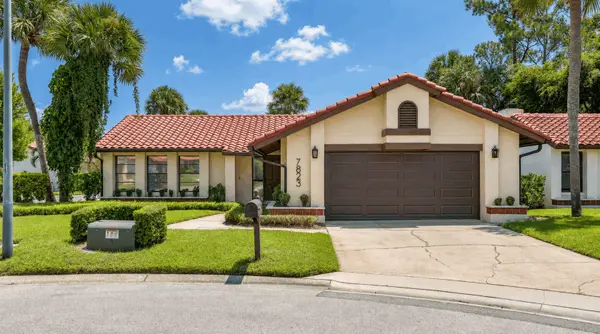
Large single-family home in Orlando Florida suburb with pool and two-car garage under afternoon light

What Does It Actually Cost to Own a 5,000 Sq Ft Home in Orlando Each Month?

The all-in monthly cost of owning a large home in the Orlando metro — combining mortgage, taxes, insurance, utilities, HOA or CDD fees, and baseline maintenance — commonly exceeds $6,000 to $10,000 per month for high-value properties in the $900,000–$1.5 million range. That figure is not the mortgage alone. It is everything the home demands from you each month, regardless of whether you are using all 5,000 square feet. Here is how the stack typically breaks down.

Property Taxes

Florida's effective property tax rate for primary residences typically falls between 1.0 and 1.8 percent of assessed value after homestead exemption. For a home assessed at $1.2 million, that translates to roughly $12,000–$18,000 per year — or $1,000–$1,500 per month. Owners who purchased recently or who have seen strong appreciation may be working off a higher assessed value than their neighbors, especially before Save Our Homes protections accumulate over time.

Homeowners Insurance and Hurricane Deductibles

This is the category that has changed most dramatically. Florida's insurance market has seen sustained premium increases, and recent Florida insurance reforms through 2025 tighten claim handling, increase documentation requirements, and shift some risk burden back to policyholders. Annual premiums for a high-value Orlando home can run $8,000–$20,000 or more depending on location, roof age, construction type, and coverage structure.

What catches most owners off guard is not the annual premium — it is the hurricane deductible. These are percentage-based, commonly 2–5 percent of insured value. On a home insured at $1.2 million, a 3 percent hurricane deductible means $36,000 comes out of pocket before the insurer pays anything in a named storm. That is not a monthly cost — but it is a real financial exposure that must factor into how much liquidity you keep available.

Utilities: Where Large Homes Diverge from Averages

Standardized utility estimates for Orlando — around $200–$230 per month — are built on modest usage profiles, typically modest electricity usage and a small water load. Those numbers describe apartments or smaller homes, not a 5,000 square foot home running multiple HVAC zones, a pool pump, irrigation, and year-round cooling.

Local homeowner data and Orlando-area real estate guidance consistently show electric bills reaching $400 per month for homes under 2,000 square feet in summer. For a large home with a pool, $600–$900 per month in peak summer is realistic. Electricity is the dominant share of a typical Orlando utility bill, and that dominance only increases in larger homes where cooling load drives nearly all consumption.

HOA, CDD, and Community Fees

Many of the communities where 5,000 square foot Orlando homes sit — master-planned golf communities, gated developments, newer suburban enclaves — carry HOA dues and sometimes separate Community Development District (CDD) assessments. These can range from $200 to $800 or more per month depending on community amenities and infrastructure obligations. CDD assessments, in particular, are often missed entirely by buyers and owners reviewing their cost stack because they appear on the property tax bill rather than as a separate invoice.

Maintenance, Capital Expenditures, and Florida's Accelerated Wear Cycle

Florida's climate is harder on homes than most owners account for. Heat, humidity, UV exposure, and storm season accelerate deterioration on roofs, exterior paint, wood elements, pool equipment, and HVAC systems. A disciplined estimate for annual maintenance and capital reserves on a large Florida home with a pool runs 1.5–2.5 percent of home value per year. On a $1.2 million home, that is $18,000–$30,000 annually, or $1,500–$2,500 per month set aside. Not all of that is spent every year — but it will be needed over time, and homes that defer it show it at inspection.

How Florida's Recent Insurance Reforms Affect Large-Home Owners Specifically

Recent Florida insurance reforms through 2025 are not minor policy adjustments — they materially alter how claims are filed, documented, and settled for large residential properties in the Orlando area (with stricter timelines for filing and supplementing claims, and heavier documentation requirements throughout the process). Owners of high-value homes face the highest exposure because their insured values are largest and because any dispute over a claim involves more money. The new rules tighten the timelines within which claims must be filed and supplemented, increase the documentation burden on homeowners, and change how roof-related claims are handled under older policies.

What this means practically: if a named storm damages a 5,000 square foot home with a 15-year-old roof, the path to a full settlement is now more complex, more document-intensive, and more time-consuming than it was under prior rules. Owners who have not yet had an independent wind-mitigation inspection, updated their policy language, or reviewed their current deductible structure should do so before storm season.

The percentage-based hurricane deductible is the single largest hidden financial risk for large-home owners in the Orlando metro. A standard homeowners policy deductible might be $2,500. A 3 percent hurricane deductible on a $1.5 million insured value is $45,000. That distinction only becomes visible when a storm hits — which is the wrong moment to learn about it.

What the 2026 Orlando Market Actually Looks Like for Sellers of Large Homes

Orlando's housing market in early 2026 is meaningfully different from 2021 and 2022. Inventory has risen substantially — local reporting shows active supply at 4.4 to 6.8 months across the metro, compared with the sub-two-month levels of peak pandemic demand. Median home values have declined modestly on a year-over-year basis. Buyers have more choices, more time to decide, and more negotiating leverage, particularly in the upper price tiers where large homes compete for a smaller buyer pool.

For sellers of higher-end 5,000 square foot properties, this translates to longer marketing times — often 60–120 days or more from listing to contract — and a pricing environment that rewards accurate initial pricing over optimistic anchoring. Sellers who enter the market expecting 2021 dynamics and pricing at 2022 levels tend to experience price reductions and extended days on market, both of which work against them in negotiations.

The other market reality for large Orlando home sellers is the insurance and inspection gauntlet that buyers now navigate. A buyer's lender will often require an insurance commitment before closing — and aging roofs, older HVAC systems, and electrical panels that might have passed smoothly in a hot market become negotiating points or deal conditions in today's more deliberate environment. Sellers who proactively address roof age, four-point inspection concerns, and wind-mitigation documentation reduce friction and increase the probability of a clean transaction.

Keep, Sell, Downsize, or Rent Out: How to Think Through the Decision

Most owners of large Orlando homes are not asking whether to sell — they are asking whether staying still makes sense. The honest answer requires building a complete cost picture and comparing it against realistic alternatives. Here is how I frame it with my clients.

Scenario A: Stay and Optimize

If the all-in monthly cost is manageable, the home is in strong condition, and the owner's lifestyle genuinely uses the space, staying is rational — but only with a clear-eyed view of rising insurance costs and the capital expenditure schedule ahead. Optimizing means shopping insurance proactively, investing in wind-mitigation features that reduce both risk and premium, addressing deferred maintenance before it compounds, and running an energy audit on HVAC and windows to reduce the utility load.

Scenario B: Downsize Within Orlando

Downsizing within the metro preserves social and professional networks while potentially reducing carrying costs. The catch: many of Orlando's desirable smaller properties — newer construction, central locations, luxury condos — carry HOA or condo fees that offset a significant portion of the savings from lower square footage. A 2,500 square foot home in a premium community may cost only marginally less per month than a 5,000 square foot home in an older community when all fees and taxes are factored in. Owners considering this path need to compare all-in costs, not sticker prices.

Scenario C: Sell and Relocate

The Florida "no income tax" advantage is real — but for large-home owners, it can be partially or fully offset by insurance, property taxes, and storm risk. Owners considering relocation to lower-cost markets should compare the full ownership stack in both locations, not just state income tax rates. In some scenarios, moving to a state with moderate income tax but significantly lower homeowners insurance and property taxes produces a better net financial outcome.

Scenario D: Convert to Rental

Renting out a 5,000 square foot Orlando home as a luxury long-term rental is viable in certain communities, but the math is harder than it looks. Landlord insurance rates are higher than homeowner rates. Property management fees typically run 8–12 percent of gross rents. Vacancy and capital expenditure reserves must be factored. When insurance, taxes, management, and capex are all included, many large Orlando homes produce thin or negative cash flow as rentals — making the decision primarily a decision about equity preservation and flexibility rather than income generation.

Homeowner reviewing financial documents and laptop at kitchen table in large Orlando home

The Costs Most Orlando Large-Home Owners Underestimate

In my experience, owners who believe they have a handle on their carrying costs are almost always missing at least two or three of the following line items. Each one is real, recurring, and material.

  • CDD assessments — Often embedded in the tax bill, not a separate invoice. Frequently overlooked until a refinance or sale surfaces them.
  • Hurricane deductible exposure — The gap between what owners think they owe in a storm and what their policy actually requires can be tens of thousands of dollars.
  • Pool-related capital costs — Resurfacing, equipment replacement, deck repair. A pool that looks fine at year seven is often due for $8,000–$15,000 in work by year twelve.
  • Roof replacement timeline — Florida's insurance market makes roof age a financial event, not just a maintenance issue. An aging roof affects insurability, premiums, and buyer financing options.
  • HVAC replacement cycles — In a large home with multiple systems, replacing one unit is common every 10–12 years. Replacing all systems in a compressed window is a significant unbudgeted event.
  • Opportunity cost of equity — The equity locked in a large home that is over-sized for current needs is real capital that is not compounding elsewhere. This is not a cash cost — but it is a financial cost that belongs in any honest comparison.

A Practical Starting Point: Build Your Real Monthly Number

Before making any decision about staying, selling, or downsizing, the most valuable thing an Orlando large-home owner can do is build their actual all-in monthly ownership cost — not an estimate, but the real number from real documents. Here is what to pull together.

  • Last 12 months of utility bills, averaged by month
  • Current insurance declarations page — including the hurricane deductible amount in dollars
  • Most recent property tax bill — including any CDD line items
  • HOA statements for the last 12 months
  • A rough log of maintenance and repair spending over the past three years
  • Remaining mortgage balance, rate, and monthly principal and interest

Once those numbers are on paper, divide the annual non-mortgage costs by 12 and add them to the mortgage payment. That is your real monthly number. Most owners find it is meaningfully higher than their mental estimate — and that gap is what drives better decisions.

If you want to work through this exercise with someone who knows the Orlando large-home market specifically, I am available to walk through it with you. No pressure toward any particular outcome — the goal is clarity.

Frequently Asked Questions: Owning a Large Home in Orlando

What is the all-in monthly cost of owning a 5,000 sq ft home in the Orlando metro?

The all-in monthly cost commonly exceeds $6,000 to $10,000 per month for high-value properties in the $900,000–$1.5 million range, combining mortgage, property taxes, homeowners insurance, utilities, HOA or CDD fees, and baseline maintenance. That figure is not the mortgage alone — it is everything the home demands each month regardless of whether all 5,000 square feet are in use.

How much do utilities run for a large Orlando home with a pool?

Electricity is the dominant share of a typical Orlando utility bill, and that dominance only increases in larger homes where cooling load drives nearly all consumption. Local homeowner data shows electric bills reaching $400 per month for homes under 2,000 sq ft in summer; for a large home with a pool, $600–$900 per month in peak summer is realistic. Headline utility averages of $200–$230 per month describe apartments or modest homes, not a 5,000 sq ft property running multiple HVAC zones and a pool pump.

How much can homeowners insurance cost on a million-dollar Orlando home?

Annual premiums for a high-value Orlando home can run $8,000–$20,000 or more depending on location, roof age, construction type, and coverage structure. Hurricane deductibles are commonly 2–5 percent of insured value — on a home insured at $1.2 million, a 3 percent hurricane deductible means $36,000 comes out of pocket before the insurer pays anything in a named storm.

How do Florida's recent insurance reforms affect large-home owners in Orlando?

Recent Florida insurance reforms through 2025 tighten the timelines for filing and supplementing claims, increase the documentation burden on homeowners, and change how roof-related claims are handled under older policies. Owners of high-value homes face the highest exposure because their insured values are largest. Owners who have not yet had an independent wind-mitigation inspection, updated their policy language, or reviewed their current deductible structure should do so before storm season.

How long does it take to sell a large high-end home in Orlando in 2026?

For sellers of higher-end 5,000 sq ft properties, current conditions translate to longer marketing times — often 60–120 days or more from listing to contract. Orlando inventory sits at 4.4 to 6.8 months of supply across the metro, buyers have more choices, and the upper price tiers compete for a smaller buyer pool. Sellers anchoring to 2021–2022 pricing expectations tend to experience price reductions and extended days on market.

Should I keep my large Orlando home as a rental or sell and invest elsewhere?

Renting out a 5,000 sq ft Orlando home is viable in certain communities, but the math is harder than it looks. Landlord insurance rates are higher than homeowner rates, property management fees typically run 8–12 percent of gross rents, and capital expenditure reserves must be factored in. When all costs are included, many large Orlando homes produce thin or negative cash flow as rentals — making the decision primarily about equity preservation and flexibility rather than income generation.

Does downsizing within Orlando actually reduce monthly housing costs?

Not always proportionally. Many of Orlando's desirable smaller properties carry HOA or condo fees that offset a significant portion of the savings from lower square footage. A 2,500 sq ft home in a premium community may cost only marginally less per month than a 5,000 sq ft home in an older community when all fees and taxes are factored in. Owners considering this path need to compare all-in costs, not sticker prices.

What maintenance and capital expenses should I plan for in a large Orlando home over the next 10 years?

A disciplined estimate for annual maintenance and capital reserves on a large Florida home with a pool runs 1.5–2.5 percent of home value per year — $18,000–$30,000 annually on a $1.2 million home. Florida's climate accelerates deterioration on roofs, pool equipment, and HVAC systems. Pool resurfacing, HVAC replacement cycles, and roof replacement are the three largest predictable capital events, and roof age now carries insurance consequences beyond just repair cost.

What are HOA dues and CDD fees, and how do they affect my real cost of ownership?

HOA dues and Community Development District (CDD) assessments can range from $200 to $800 or more per month in many Orlando communities where large homes are located. CDD assessments are frequently overlooked because they appear on the property tax bill rather than as a separate invoice. Both are real recurring obligations that belong in any honest cost-of-ownership calculation.

What is the first step if I am trying to decide whether to stay in or sell my large Orlando home?

Build your actual all-in monthly ownership cost from real documents — not a mental estimate. Pull together the last 12 months of utility bills, your current insurance declarations page including the hurricane deductible amount in dollars, your most recent property tax bill including any CDD line items, HOA statements, a rough log of maintenance spending over the past three years, and your mortgage principal and interest. Divide annual non-mortgage costs by 12 and add them to your mortgage payment. Most owners find the real number is meaningfully higher than their estimate — and that gap is what drives better decisions.

Yousef Zeidan

+1(917) 743-8865

yousef@floridalistings.io

311 S Main St, Winter Garden, FL, 34787

Request Discovery Call 

Name
Phone*
Message