
HOA Rules for Seasonal Residents in Orlando: The Absentee Lock-and-Leave Guide
⚡ Quick Summary
- The Covenant Rule: Private homeowners association covenants in Orlando act as deed restrictions that completely override city or county zoning, allowing HOAs to outlaw short-term rentals and lease iterations even in municipal areas zoned for transient use.
- The Home Sharing Conflict: The City of Orlando's Home Sharing Registration Program enforces a strict 51% primary residency mandate, legally prohibiting out-of-state snowbirds and non-resident owners from hosting transient guests while away.
- The Absentee Risk: Chapter 720 (Single-Family HOAs) and Chapter 718 (Condos) enforce radically different reserve and maintenance rules. Out-of-state owners face compounding daily fines for unaddressed exterior infractions (landscaping, paint) and strict HOPA 55+ guest registry requirements.
If you spend winters in Orlando and summers elsewhere, achieving a true "lock-and-leave" living footprint is likely your ultimate operational goal. However, private homeowners association regulations will shape your day-to-day ownership experience significantly more than standard marketing listings will ever explicitly detail.
Before you commit to a specific neighborhood node, you need to dissect exactly what the community covenants, conditions, and restrictions (CC&Rs) dictate regarding lease limitations, guest registries, seasonal vacancies, and remote property management. This comprehensive guide cuts through the common misconceptions so you can implement a portfolio strategy that protects your asset year-round.
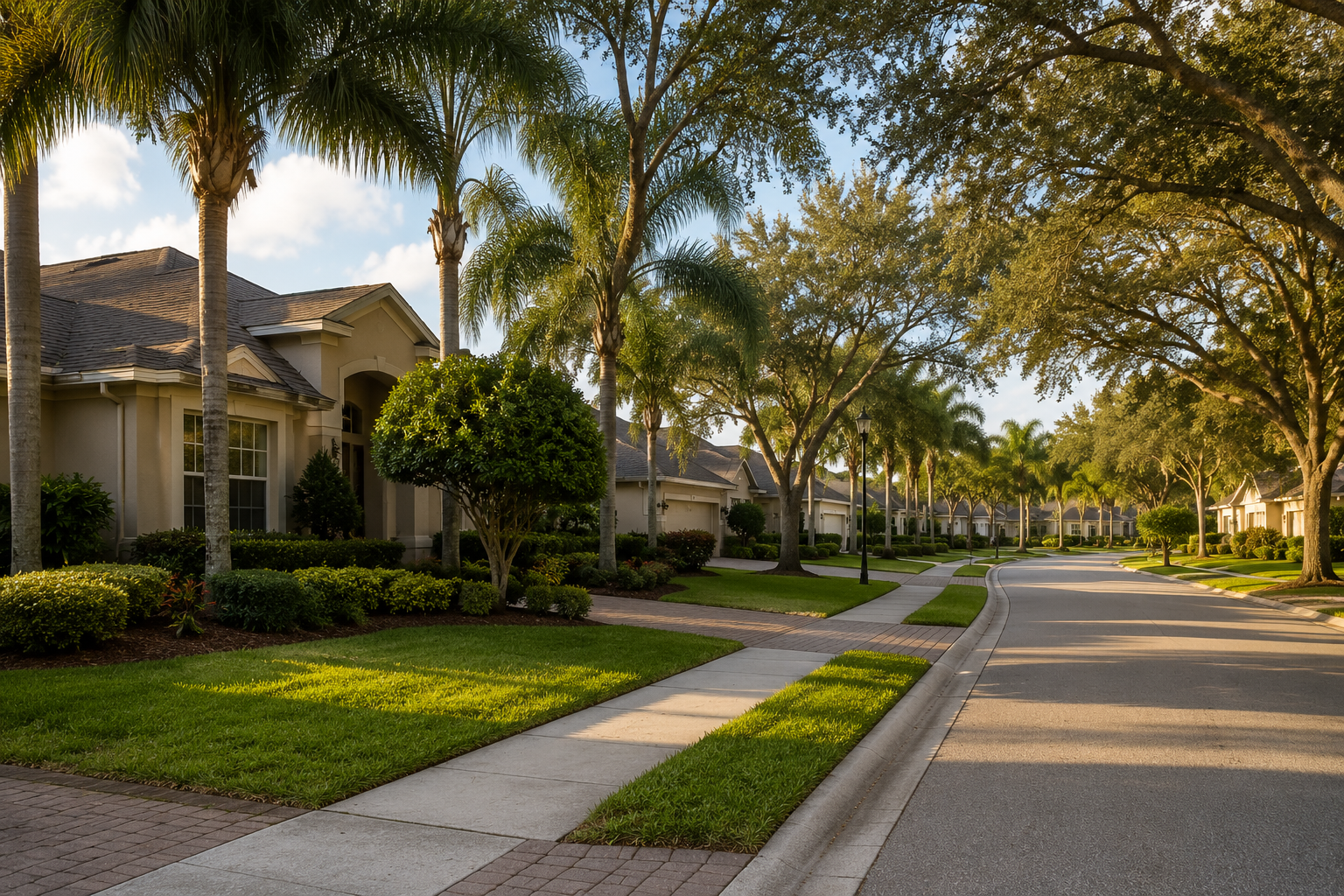
Can Orlando HOAs Supercede Municipal Zoning to Restrict or Ban Short-Term Rentals?
Yes — and the vast majority systematically do. HOA covenants across Southwest Orange County operate as private contract laws that legally bind deed holders and sit entirely on top of city and county municipal ordinances. Even when broad Orlando municipal zoning frameworks explicitly permit short-term rental activity within a specific geographic pocket, a private homeowners association can enforce much more rigid parameters.
Covenants routinely dictate extended minimum stay requirements, limit the total allowed lease iterations processed per fiscal year, mandate deep third-party background screenings, or outlaw rental activity entirely. Local zoning is simply a baseline floor, not an operational ceiling. You must audit both governance layers before assuming an asset can generate transient capital income.
For empty nesters or seasonal buyers intending to offset carrying overhead with occasional tenant revenue, running an exhaustive review of the HOA's explicit contract language is step one of proper due diligence. Ignoring these lease barriers can lead to severe operational gridlock. If you find a neighborhood's structural parameters clash with your long-term liquidity layout, it is helpful to analyze how long it takes to sell a luxury home in Orlando to evaluate your exit options cleanly.
How Orlando's Home Sharing Rules Conflict With Typical Snowbird Patterns
The 51% Residency Rule Conflict
The City of Orlando's official Home Sharing Registration Program enforces a rigid operational mandate: the property must serve as the owner's lawful primary residence, and the individual must occupy the structure for at least 51% of the calendar year. Out-of-state snowbirds cannot satisfy this requirement — legally prohibiting you from utilizing transient home-sharing platforms (like Airbnb) while you are out of state.
Consequently, the realistic leasing path for seasonal stakeholders involves long-term corporate or stable residential tenancy. If you are actively cross-shopping residential footprints with this operational reality in mind, check out our updated strategic briefs on should you downsize your Dr. Phillips home to isolate submarket pockets carrying flexible leasing terms.
If your current residence is trapped under unmanageable rental barriers or languishing on the open market, evaluate our diagnostic teardown on why your Orlando home is not selling to correct your positioning strategy.
What HOA Statute Type Matters: Chapter 720 vs. Chapter 718
The state of Florida divides residential governance across two completely separate legislative frameworks: single-family subdivisions operate under Chapter 720 (HOA), while condominium structures are legally bound by Chapter 718 (Condo Association Law). For an absentee owner, understanding which statute manages your deed determines your liability and capital reserve protection paths.
Gated Community HOA/CDD Governance Matrix
| Enclave / Micro-Node | Statutes & Governance | Lease & Rental Limits | Absentee Maintenance Carry |
|---|---|---|---|
| Isleworth (Windermere Gate) | Ch. 720 (Guard-Gated) | Strict 1-Yr Min / No Transient | Full Private Estate Watch Required |
| Bay Hill / Phillips Landing | Ch. 720 ($0 CDD) | 7-to-30 Day Minimums | Individual Yard & Pool Balance Sheet |
| Vizcaya / Park Ave Condos | Ch. 718 (Condo SIRS Mandatory) | Strict Annual Caps / Board Approval | Included Exterior Groundskeeping |
Chapter 720
(Single-Family Homeowners Association)
- Ownership: Direct fee simple ownership of structure & underlying land parcel.
- Maintenance: 100% individual owner balance sheet responsibility for exterior/roof.
- Reserves: Statutorily optional in many setups (vulnerable to special assessments).
- Lease Rules: Grandfathering protection clauses exist for current deed holders.
Chapter 718
(Condominium Association Law)
- Ownership: Airspace title and drywall footprint; shared fractional elements.
- Maintenance: Fully managed and funded collective association responsibility.
- Reserves: Strictly mandatory post-Surfside legislation (SIRS studies).
- Lease Rules: Association modifications can bind all unit owners uniformly.
For seasonal owners prioritizing a seamless, lock-and-leave lifestyle, rightsizing into a low-maintenance single-story home or custom garden footprint within a walkable Orlando neighborhood often minimizes legislative compliance friction while stabilizing long-term carrying overhead compared to multi-story condominium developments.

HOPA Compliance and Rigid Guest Registries for Seasonal Residents
If you are relocating into an active-adult or empty-nester subdivision governed by the federal Housing for Older Persons Act (HOPA), association boards are statutorily mandated to verify that at least 80% of the occupied properties contain at least one occupant aged 55 or older. To maintain this federal certification shield, age-restricted communities across Southwest Orlando enforce exceptionally rigid guest tracking systems.
Mandatory Guest Registry Filings
Seasonal stakeholders must formally submit guest notifications and registry manifests to the board whenever family members or guests occupy the residence during the owner's out-of-state absence. Failing to file these manifests can result in your family being flagged as unauthorized occupants, triggering automatic compliance fines or gate access device suspension.
Is Your Property Portfolio Insulated Against Absentee Risk?
We provide luxury seasonal owners and downsizers with an exclusive strategy panel covering tax portability tracking, remote risk mitigation, and concierge market-ready preparation.
Access My Private Relocation Strategy PanelAbsentee Management Friction and Compounding Carrying Outlays
Out-of-state property owners face a hidden financial hazard: code or covenant infractions (such as landscape overgrowth, irrigation failures, or faded trim paint) continue to systematically accumulate daily fines while you are away. Under Florida guidelines, unaddressed association fines can rapidly escalate into formal property liens and eventually trigger summary foreclosure filings.
If the administrative overhead or physical strain of a legacy estate is complicating your calendar, evaluating a move via downsizing vs. rightsizing in Orlando can dissolve these liabilities permanently.
Furthermore, seasonal buyers must accurately model several underlying line-item carrying costs that standard portals distort:
- Dynamic Escrow Estoppel & Management Transfers: Fixed administrative friction outlays charged at title completion by property management vendors.
- Non-Homestead Property Tax Resets: Properties that do not serve as an owner's principal legal domicile are excluded from the Save Our Homes 3% assessment cap. Review our localized matrix to analyze exactly what property taxes cost in Orlando for non-resident stakeholders.
- Systemic Special Assessment Vulnerabilities: Before acquiring a home, cross-reference character homes vs. new construction parameters to audit long-term common maintenance liabilities.
Hurricane Season Risk Mitigation and The Butler Chain Basin
The standard snowbird migratory flow means handing off property control right at the historical peak of the Atlantic hurricane season. While master associations coordinate common amenity groundskeeping, the legal and financial obligation to secure individual structural envelopes sits entirely on your personal balance sheet.
For waterfront property owners holding positions along the Butler Chain of Lakes, seasonal water-level fluctuations, dock utility exposures, and specialized shoreline seawall stabilization require dedicated, on-site home-watch professionals to mitigate catastrophic environmental risks while you are out of state.
How to Audit an Orlando HOA Agreement Before Making an Offer
If you are a current Southwest Orlando resident planning an asset transition or establishing a seasonal footprint, utilize our comprehensive Dr. Phillips snowbird home buyer guide. Before executing a binding purchase contract, verify that your advisory team processes these four operational compliance checks:
Need hyper-local, NDA-compliant real estate counsel? You can contact Yousef directly to audit neighborhood parameters, or analyze our strategic approach to how we cleanly position and sell properties within Orlando's most exclusive guard-gated enclaves.
Frequently Asked Questions
Can an HOA in Orlando ban short-term rentals even if city zoning permits them?
Absolutely. HOA covenants function as private contracts that deed holders enter into voluntarily. Because private contracts can legally implement more restrictive parameters than broad public laws, an association's leasing prohibitions completely override municipal zoning allowances.
Do I need to report family members or relatives staying in the home to the HOA?
Yes, in a significant percentage of managed developments. Proactive registry notification is strongly recommended to protect your family from being flagged under unauthorized occupant clauses. In age-restricted HOPA subdivisions, this documentation is a mandatory compliance step.
What is the legal difference between Orlando home sharing and a standard short-term rental?
Orlando's home-sharing ordinance strictly requires the primary deed holder to maintain their legal domicile on-site and occupy the property for at least 51% of the calendar year, limiting transient booking options while the owner is out of state.
Audit Your HOA Before You Write an Offer
Don't get trapped by surprise rental restrictions, underfunded reserves, or strict guest rules. Let's pull the full CC&R package and audit your community rules today.
Direct Strategy Line: (917) 743-8865
Yousef Zeidan
Luxury Right-Sizing, Downsizing, and Tax-Sensitive Relocation Specialist
Specializing in luxury right-sizing, downsizing, and tax-sensitive relocation in Dr. Phillips, Windermere, and the Butler Chain of Lakes.
- Brokerage: RE/MAX Prime Properties
- License ID: SL3520428
- Phone: +1 (917) 743-8865
- Email: yousef@floridalistings.io
- Office Address: 2713 St Armand Ct, Orlando, FL 32835, USA
Categories
Recent Posts







Request Your Confidential Risk Audit