
Orlando Property Tax Rate 2026: What You'll Actually Pay
⚡ Quick Summary
- The Core Answer: Online listing portals display artificial 0.85% historical property tax averages protected by legacy caps, but 2026 home buyers face actual property tax rates starting between 1.5% and 1.9% of the purchase price, dictated by whether an address sits inside incorporated Orlando limits (about 18.0–19.2 mills) or unincorporated Orange County (about 16.0–19.4 mills, depending on tax district).
- The Tax Traps: Sprawling master-planned hubs like Lake Nona (Laureate Park) and Horizon West overlay non-ad valorem CDD infrastructure fees adding $1,200 to $4,500 annually entirely separate from HOA dues. Additionally, new construction buyers routinely face a brutal "Year-Two Tax Trap" when first-year bills assessed on raw land (<$1,000) suddenly correct to reflect the completed structure (>$7,000), causing sudden mortgage escrow shock.
- The Deadlines & Exemptions: A seller's historical Save Our Homes (SOH) assessment cap wipes out at closing and resets on January 1st of the first full year of ownership, meaning buyers must manually file for their new Homestead Exemption and up to $500,000 in portable SOH equity (Form DR-501T) before the strict March 1, 2027 statutory deadline (for the 2027 tax year).
Orlando Property Tax Rate 2026 at a Glance
Total 2026 millage (1 mill = $1 per $1,000 of taxable value), per the Orange County Property Appraiser. Your exact rate depends on your tax district.
| Area | 2026 total millage |
|---|---|
| City of Orlando (incl. Lake Nona) | 17.98–19.18 mills |
| Unincorporated Orange County (incl. most of Dr. Phillips) | about 16.0–19.4 mills |
| Winter Park | 14.00–15.24 mills |
| Windermere | 15.13–15.38 mills |
| Winter Garden | 16.19–16.91 mills |
Example: Taxes on a $500,000 Orlando Home
- Primary home with homestead, inside city limits (18.98 mills): about $8,700/yr (~1.74%)
- Second home or rental, same address: about $9,490/yr (~1.90%)
- Primary home with homestead, unincorporated area (16.03 mills): about $7,370/yr (~1.47%)
Estimates assume assessed value equals purchase price and the standard $50,000 homestead exemption ($25,000 applies to school taxes). They exclude CDD assessments and non-ad valorem fees such as solid waste. Check your parcel on the Orange County Property Appraiser site for exact figures.
Amendment 3 (November 3, 2026): What It Would Change
Florida voters will decide Amendment 3 on November 3, 2026. If it passes (constitutional amendments need 60% of the vote), it would raise the homestead exemption on non-school property taxes to $150,000 in 2027 and $250,000 in 2028, and lower the annual assessment-increase cap on non-homestead property from 10% to 5%, starting January 1, 2027.
It would not change your 2026 tax bill. If you are buying or selling in Orlando, ask how the result could affect your 2027 escrow estimate. I will update this guide after the election.
If you searched for Orlando's property tax rate and landed on a number around 0.85%, you were looking at a statistical average built on twenty years of capped, legacy homeowner bills.
For anyone downsizing or buying a luxury home in 2026, or anyone who received a TRIM notice that made their stomach drop, the real number starts closer to 1.5% and climbs past 1.9% of your purchase price depending on exactly where in Orange County your address sits. This guide closes the gap between what portals display and what your mortgage servicer will actually collect.
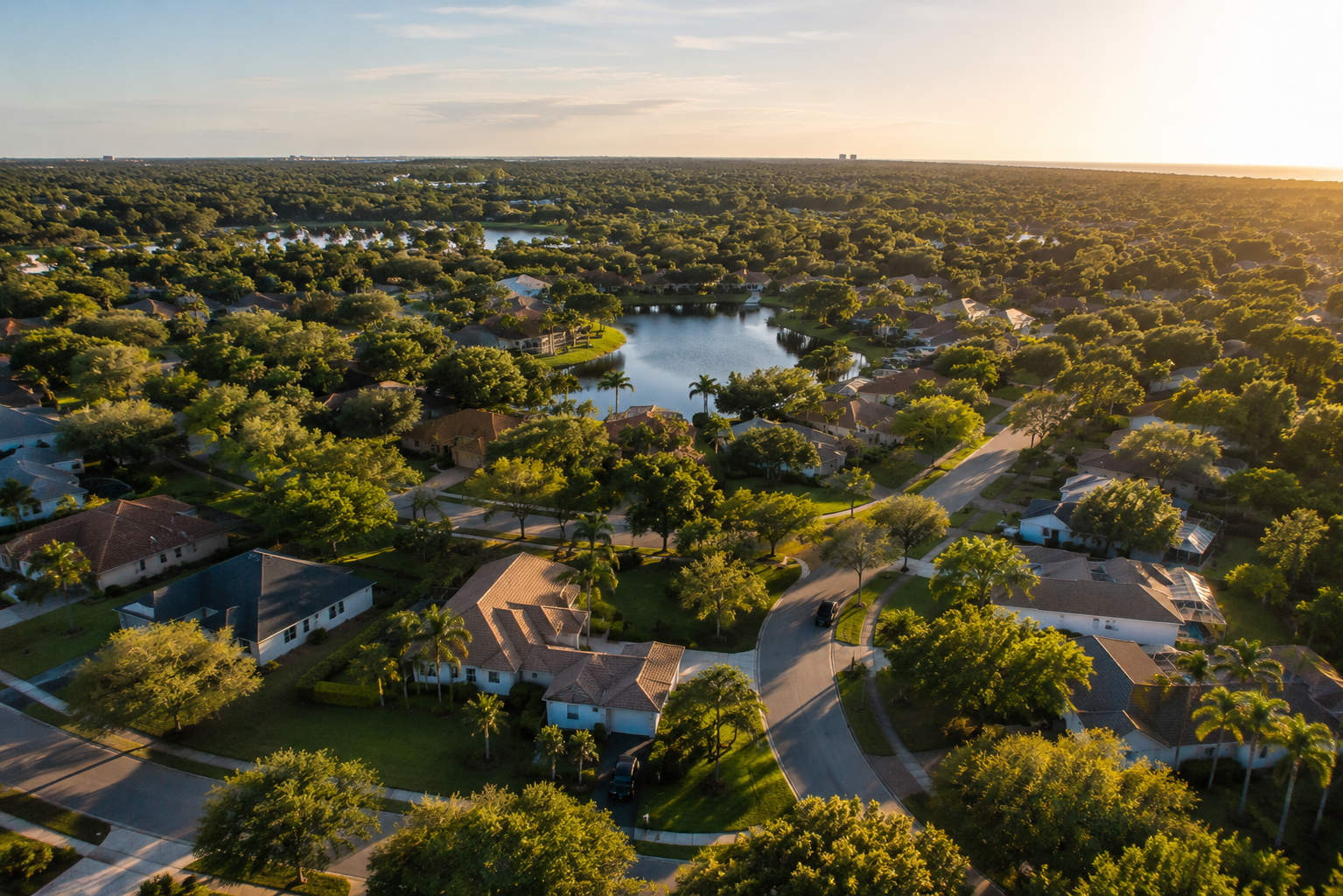
What Is the Actual Property Tax Rate in Orlando for 2026?
Properties inside Orlando city limits carry a combined 2026 millage rate of about 17.98 to 19.18 mills (roughly $1,800–$1,920 per $100k of taxable value). Properties in unincorporated Orange County, including most of Dr. Phillips, typically run about 16.0 to 19.4 mills depending on tax district. For a new buyer, that works out to roughly 1.5% to 1.9% of the purchase price per year.
The confusion stems from how national platforms calculate "effective tax rates." They divide total county tax revenue by total market value, a figure that includes thousands of longtime homeowners whose assessed values have been frozen near 2005 levels under the Save Our Homes cap. When you execute a luxury downsizing purchase in 2026, that cap resets entirely. Your taxable value is the price you paid, and your rate is applied to that full number.
Here is the 2026 millage breakdown by jurisdiction (Orange County Property Appraiser 2026 rates):
City of Orlando (Incorporated)
- Total Millage: 17.98–19.18
- CDD Exposure: $340–$600 Base
Unincorporated Orange Co.
- Total Millage: ~16.0–19.4
- CDD Exposure: $340–$600 Base
Lake Nona / Laureate Park
- Total Millage: 18.0–19.2
- CDD Exposure: $1,200–$4,500/yr
Horizon West / Windermere
- Total Millage: Varies
- CDD Exposure: $1,500–$3,500/yr
In my experience working with buyers comparing homes on adjacent streets where one address falls inside city limits and the other does not, this single jurisdictional line is responsible for hundreds of dollars of annual difference that no mortgage calculator at a bank will flag proactively. This balance is critical to account for when executing an Orlando luxury downsizing strategy to preserve your liquid equity position.
Why Does My Property Tax Reset After I Buy an Orlando Home?
Florida's Save Our Homes amendment caps annual assessment increases at 3% or the rate of inflation for primary residences, but that cap belongs to the previous owner and disappears the moment the deed transfers. The Orange County Property Appraiser resets your assessed value to current market value on January 1 of the first full calendar year of your ownership.
Here is the precise legal timing that confuses buyers and their lenders: if you close in June 2026, the November 2026 tax bill still reflects the seller's historic, capped value. It is not until November 2027 that your bill reflects the fully reset assessment. This means your lender's initial escrow estimate is based on a number that will not survive the year.
The practical result: on a $500,000 home where the previous owner's assessed value was $280,000 due to twenty years of 3% caps, your new taxable base is $500,000 minus your exemption. The escrow underage can hit $2,000–$4,000 in a single adjustment cycle, which lenders spread over the following twelve months — effectively raising your monthly payment without any change to your interest rate or principal. Before structuring an offer, cross-examine baseline metrics via our detailed Orlando Property Tax Guide.
What Are the 2026 Property Tax Deadlines Every Orange County Owner Must Know?
The next major deadline is March 1, 2027, the cutoff to file a homestead exemption for the 2027 tax year with the Orange County Property Appraiser; miss it and your property is assessed at full market value with no cap protection for the entire year.
The September 18 deadline is the one I see homeowners miss most often. They receive their TRIM notice in August, feel surprised by the number, spend six weeks talking to neighbors, and then call me on September 19. At that point, the VAB petition window is closed for the year.
How Does the Florida Homestead Exemption Actually Work in Orange County?
The standard exemption reduces your taxable value by up to $50,000, but the two halves work differently: the first $25,000 reduces your value for every taxing authority including school districts, while the second $25,000 applies only to non-school levies.
That school board distinction is the reason that online calculators that apply the full $50,000 exemption across all millage rates will always understate your actual tax liability. On a $450,000 home, the school board's taxable value is $25,000 higher than the county's taxable value, and with school mills running between 6.5 and 7.0, that gap costs real money each year.
Investors and out-of-state buyers do not qualify for any homestead exemption. Attempting to carry an exemption on a property you are renting out triggers back-taxes, a 50% penalty, and 15% annual interest on the recovered amount.
What Is Save Our Homes Portability and How Do You Transfer It?
Save Our Homes portability allows Florida homeowners to carry up to $500,000 of accumulated assessment differential to a new primary residence, provided they file Form DR-501T alongside their new homestead application within three years of abandoning the previous exemption.
Portability does not transfer automatically at closing. This is the single most expensive administrative error I encounter. Review the complete statutory requirements for Florida Homestead Portability in Dr. Phillips before finalizing your move.

What Are CDD Fees and How Much Do They Add in Lake Nona and Horizon West?
Community Development District fees are non-ad valorem assessments that appear as a separate line on your annual tax bill, funding the infrastructure bonds of master-planned communities; in neighborhoods like Lake Nona, Laureate Park, and Horizon West, these fees add $1,200 to $4,500 per year entirely on top of standard county and municipal property taxes.
The structure of a CDD assessment confuses buyers because it does not appear in most mortgage affordability calculators and is often listed separately from both the ad valorem tax estimate and the HOA fee. To prevent surprise line items on your escrow statements, study how assessments differ between a CDD vs. HOA in Dr. Phillips.
The New Construction Tax Trap: Why Year-Two Bills Shock Buyers
The Year-Two Underwriting Trap
New construction homes are assessed based on their completion status as of January 1, meaning a home that closed in October will generate a first-year tax bill reflecting only the raw land value. The full structure is not assessed until the following January 1, producing a second-year bill that can jump from under $1,000 to over $7,000 and trigger a severe mortgage escrow shortage.
Buyers of resale inventory avoid this entirely because the assessment baseline is known, transparent, and has a documented cap history. That predictability has real cash-flow value that is not visible in a simple listing price comparison.
How to Save Money on Your 2026 Orange County Property Tax Bill
- File homestead by March 2: The standard $50,000 exemption can reduce taxable value enough to save $800–$1,500 annually at current millage rates.
- File portability simultaneously: Up to $500,000 in portable equity dramatically lowers your starting assessed value.
- Pay in November: The 4% discount is a risk-free, guaranteed return on capital that outperforms most savings vehicles.
- Petition the VAB by September 18: A successful appeal lowers your permanent assessment baseline.
- Request a CDD estoppel before closing: Knowing the outstanding bond balance and annual O&M rate lets you price the true cost of ownership into your offer.
Get a Property Tax Audit Before You Buy or Sell
Don't rely on Zillow's legacy tax history. Let me run the exact year-two property tax and CDD calculation for your target address so you know exactly what your monthly payment will be.
Direct Strategy Line: (917) 743-8865
Frequently Asked Questions
What is the property tax rate in Orlando, FL?
For 2026, total millage inside Orlando city limits is about 17.98 to 19.18 mills, or roughly 1.8% to 1.9% of taxable value. Unincorporated Orange County runs about 16.0 to 19.4 mills depending on tax district. After the homestead exemption, most new owners of a primary home pay about 1.5% to 1.75% of the purchase price.
How much are property taxes on a $500,000 home in Orlando?
Inside Orlando city limits at 18.98 mills, a homesteaded $500,000 home pays about $8,700 a year, and the same home as a second home or rental pays about $9,490. In a 16.03-mill unincorporated area, a homesteaded $500,000 home pays about $7,370. CDD fees and solid waste charges are extra.
When are Orange County property taxes due?
Tax bills go out on November 1. Paying in November earns a 4% discount, which drops by 1% each month through February. The full amount is due by March 31, and unpaid taxes become delinquent on April 1.
What is the actual property tax rate for a new buyer in Orlando in 2026?
A new buyer purchasing inside Orlando city limits in 2026 faces a combined 2026 millage rate of approximately 18.0 to 19.2 mills, translating to a realistic effective tax rate of 1.5% to 1.9% of the purchase price before exemptions. Properties in unincorporated Orange County typically run about 16.0 to 19.4 mills, depending on tax district.
When does a property tax assessment reset after buying a home in Orlando?
Per Florida Statute 193.155, a property's taxable value resets to current market value on January 1 of the first full calendar year of the new owner's occupancy. A home purchased in June 2026 will still show the seller's capped value on the November 2026 tax bill. The buyer's first fully reset bill arrives in November 2027.
How do CDD fees affect the true cost of owning a home in Lake Nona or Horizon West?
Community Development District fees in master-planned communities like Lake Nona, Laureate Park, and Horizon West add between $1,200 and $4,500 per year to the non-ad valorem section of the annual tax bill. These fees are entirely separate from county property taxes and private HOA dues.
Yousef Zeidan
Luxury Right-Sizing, Downsizing, and Tax-Sensitive Relocation Specialist
Specializing in luxury right-sizing, downsizing, and tax-sensitive relocation in Dr. Phillips, Windermere, and the Butler Chain of Lakes.
- Brokerage: RE/MAX Prime Properties
- License ID: SL3520428
- Phone: +1 (917) 743-8865
- Email: yousef@floridalistings.io
- Office Address: 2713 St Armand Ct, Orlando, FL 32835, USA
Categories
Recent Posts




Request Your Confidential Risk Audit