What Do Closing Costs Actually Cost on an Orlando Luxury Home in 2026?
⚡ Quick Summary
- The Core Financial Reality: Unlocking wealth along the Butler Chain of Lakes requires navigating complex localized friction parameters where the final cash-to-close or net settlement delta routinely deviates from generic online projections due to Florida-specific deed stamps and financed note taxes.
- The Carrying Cost Nuances: Operating effectively inside Southwest Orlando demands auditing community-specific structural debts, distinguishing the permanent carrying advantages of CDD-free luxury enclaves like Isleworth from the hidden non-ad valorem bond obligations typical of newer master-planned tracks.
- The Underwriting Risks: Transaction protection and final asset funding are heavily gatekept by a strict 15-year roof insurability threshold enforcing private carrier rejections, combined with volatile property tax assessment resets and strict statutory Save Our Homes (SOH) portability windows.
If you're buying or selling a luxury home in Dr. Phillips, Windermere, or anywhere along the Butler Chain of Lakes this year, the number on the listing sheet is not the number you'll actually pay or net.
In my experience guiding right-sizing sellers out of large Sand Lake-area estates, the gap between "purchase price" and "cash to close" routinely surprises even experienced second-time luxury buyers.
That gap is bigger in Orlando than most national closing-cost calculators assume, because Florida layers in documentary stamp taxes, a mortgage intangible tax, and community-specific CDD bonds that generic portals simply don't model. This guide walks through exactly what a $2M–$3M Orange County, FL transaction costs in 2026, who customarily pays for what, and the local nuances that catch out-of-state buyers off guard.

Who Pays for Title Insurance in Orange County, FL?
Local custom in Orange County dictates that the seller pays for the owner's title insurance policy and selects the closing agent, though this remains fully negotiable in the purchase contract. In competitive luxury negotiations, I've seen buyers offer to cover the owner's policy themselves simply to retain their preferred real estate attorney for a more thorough easement and boundary review.
How Much Are Florida's State Transfer Taxes on a Financed Purchase?
Florida charges a documentary stamp tax of $0.70 per $100 of purchase price on the deed (paid by the seller). On financed deals, the state levies a $0.35 per $100 stamp tax on the promissory note plus a 0.2% intangible tax on the mortgage amount (both paid by the buyer).
On a $2,000,000 loan, those two financing-related taxes alone add roughly $11,000 — a cost cash buyers skip entirely. This tax exposure is part of why all-cash offers carry outsized negotiating leverage in Dr. Phillips and Windermere right now.
What Does a Real $3,000,000 Windermere Closing Statement Look Like?
On a $3,000,000 home with a $2,000,000 mortgage, sellers typically absorb roughly $181,000–$190,000 in combined deed stamps, owner's title insurance, brokerage commission, and prorated taxes. Buyers carry roughly $11,000–$12,000 in loan-related taxes plus prepaid items. Here is a realistic breakdown for an Orange County closing.
Seller Obligations
- Deed Doc Stamps: $21,000
- Owner's Title Insurance: $10,075
- Brokerage Fees (5% est): $150,000
- HOA Estoppel Cert: $399
- Tax Proration Credit: ~$18,000 (To Buyer)
Buyer Obligations
- Note Doc Stamps: $7,000
- Mortgage Intangible Tax: $4,000
- Appraisal Fee: $800–$1,500+
- Lender Origination: Varies by loan
- Tax Proration Credit: ~$18,000 (From Seller)
CDD Bonds vs. HOA Fees: The Cost Most Buyers Miss
The Carrying Cost Blindspot
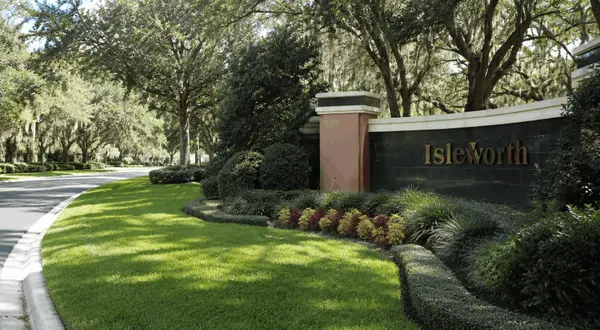
This is the nuance I walk every relocating client through before they fall in love with a newer master-planned community. A Community Development District (CDD) fee is a governmental bond assessment billed on your property tax statement, while an HOA fee is a private association charge. A community like Laureate Park in Lake Nona carries $2,400+ in annual CDD assessments stacked on top of property taxes, whereas an established enclave like Isleworth has zero CDD debt but runs $10,356/year in HOA dues. Over a 10-year hold, the "cheaper-looking" CDD community can quietly cost more.
I cover this trade-off in more depth in my CDD vs. HOA breakdown for Dr. Phillips.
How Does Save Our Homes Portability Affect a Seller's Net?
The Portability Time Limit
Florida's Save Our Homes program lets sellers transfer up to $500,000 of accumulated assessment savings to a new homestead, but only if the new homestead is established within three tax years of abandoning the old one. Miss that window and you can see your property taxes double or triple in year two.
I unpack the timeline mechanics in my Homestead Portability guide for Dr. Phillips sellers. The upcoming HJR 1-F ballot language fight makes the December 31, 2026 residency cutoff worth tracking closely — see my 2026 property tax amendment update.
Why Does Roof Age Decide Whether You Can Even Close?
Orlando's inland location keeps premiums lower than coastal Florida markets, but most private carriers will flatly decline to write a policy on an asphalt shingle roof older than 15 years, which can stall or kill financing altogether.
I've negotiated several Dr. Phillips contracts where the seller agreed to a pre-closing roof replacement specifically to keep the buyer off state-backed Citizens Property Insurance — a topic I go deeper on in Dr. Phillips Home Insurance Costs and insurance considerations for seasonal owners.
What Other Carrying Costs Should Buyers Underwrite Before Closing?
Beyond the closing statement itself, condo and townhome buyers should pull the HOA's most recent reserve study before going hard on a contract. A reserve funded below 70% is a warning sign, and below 30% almost guarantees a near-term special assessment.
I detail the fuller set of pre-closing carrying-cost variables — insurance, CDD debt, reserve health, and tax reset timing — in Dr. Phillips Hidden Carrying Costs and What It Costs to Buy a Home in Dr. Phillips.
Should You List Now or Wait Given These Costs?
For sellers carrying a heavily capped Save Our Homes assessment, timing the sale against the portability window often matters more than chasing a marginally higher list price. If you're weighing that trade-off, my Should I Sell My Orlando Home Now or Wait analysis walks through the net-proceeds math.
If you're on the buying side, How to Make a Winning Offer on Luxury covers how concession structuring (rate buydowns vs. price cuts) can protect your future resale comps.
Get a Closing-Cost-Accurate Equity Picture
Every one of these line items shifts depending on your specific community, loan structure, and closing date. Generic online calculators undercount what Orange County luxury transactions actually require.
Direct Strategy Line: (917) 743-8865
Frequently Asked Questions
Who customarily pays for owner's title insurance in Orange County, FL?
The seller customarily pays for the owner's title insurance policy and selects the closing agent in Orange County, FL, though this remains fully negotiable in the purchase contract.
What is a CDD fee, and how does it differ from an HOA fee?
A Community Development District (CDD) fee is a governmental non-ad valorem assessment billed on the property tax statement to fund infrastructure bonds, while an HOA fee is a private association assessment that funds neighborhood maintenance and amenities. Communities like Laureate Park carry CDD bonds in addition to property taxes, while established enclaves like Isleworth carry only private HOA dues.
How long does a homeowner have to port their Save Our Homes tax benefit?
Homeowners have three tax years from January 1 of the year they abandoned their previous homestead to establish a new homestead and port up to $500,000 of their Save Our Homes assessment savings, with applications due by the March 1 deadline.
Yousef Zeidan
Luxury Right-Sizing, Downsizing, and Tax-Sensitive Relocation Specialist
Specializing in luxury right-sizing, downsizing, and tax-sensitive relocation in Dr. Phillips, Windermere, and the Butler Chain of Lakes.
- Brokerage: RE/MAX Prime Properties
- License ID: SL3520428
- Phone: +1 (917) 743-8865
- Email: yousef@floridalistings.io
- Office Address: 2713 St Armand Ct, Orlando, FL 32835, USA
Categories
Recent Posts



Request Your Confidential Risk Audit