
Orlando Luxury Real Estate in 2026: The Insider's Market Guide for Buyers and Sellers
⚡ Quick Summary
- The Core Market Reality: The mid-2026 Orlando luxury market is highly bifurcated; entry-level luxury ($600K–$1.5M) features expanding inventory and increasing buyer leverage, while the $3M+ ultra-luxury estate tier on Windermere’s Butler Chain remains severely supply-constrained.
- The Epic Universe Effect: The $7B Universal Epic Universe expansion has created massive price support in Southwest Orlando, while its dedicated Catchlight Crossings workforce housing project acts as a strategic buffer, protecting luxury enclaves from high-density rezoning pressures.
- The Transaction Risks: High-equity closings are strictly gatekept by three hidden operational liabilities: Florida’s aggressive 15-year asphalt shingle roof insurance barrier, sudden CDD underestimations that disqualify buyer debt-to-income (DTI) ratios, and massive year-two property tax resets.
If you are using Zillow or Redfin to evaluate the Orlando luxury market, you are likely looking at the wrong data.
This guide separates the entry-level softness from the estate-tier strength, names the three contract-killing surprises that closing attorneys navigate regularly, and provides the submarket-level context that governs a transaction above $600,000 in Central Florida.
What Is the Orlando Luxury Real Estate Market Actually Doing in Mid-2026?
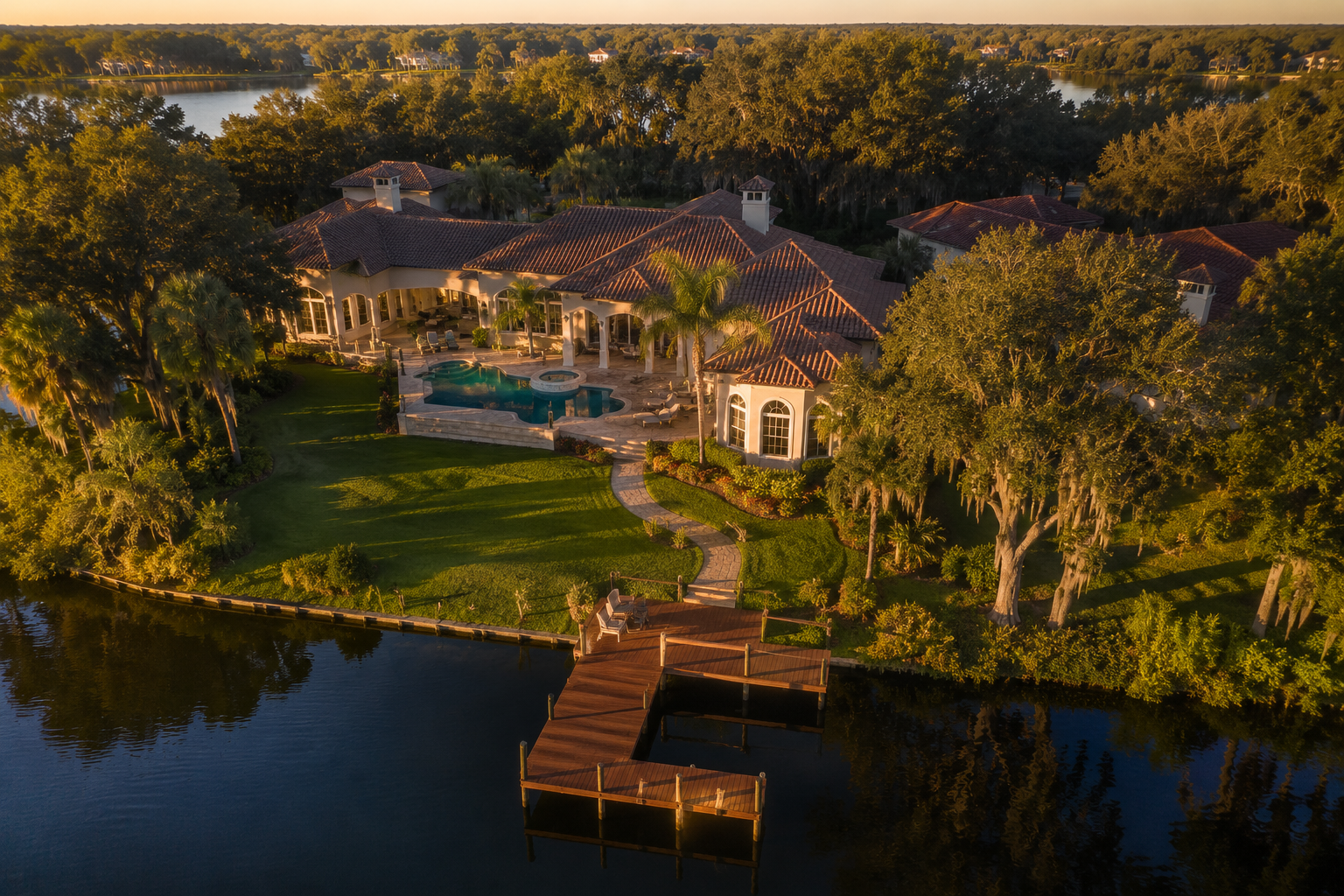
The market is bifurcated in a way that national headlines cannot capture. Entry-luxury inventory in the $600K–$1.5M range has expanded, giving buyers real negotiating leverage, while the $3M+ estate tier on the Butler Chain of Lakes in Windermere remains severely supply-constrained.
- Windermere Luxury: Median sale price ~$2.0M–$2.1M. Active inventory around 4 months of supply. Average DOM: ~60–65 days. Learn more on my Windermere page.
- Lake Nona: Median ~$725K–$780K (single-family). Structural appreciation supported by Medical City employment growth.
- Dr. Phillips: Median ~$599,900. DOM 65–72 days. No CDD fees in established subdivisions, offering a massive advantage in hidden carrying costs.
- Horizon West: Median ~$585,000. DOM ~60–65 days. Active CDD assessments of $1,500–$3,500/year on most new construction.
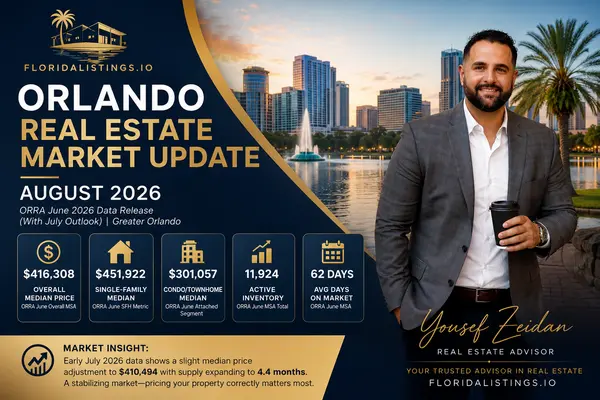
- Orlando Metro Average: ~$407,002 (May 2026). This is the broadest regional benchmark and the weakest price signal.
The Insider Nuance: Broad market indices that aggregate all home types — including condos and townhomes — show a year-over-year price decline. Isolate single-family luxury estates, and the trajectory reverses toward modest appreciation. Buyers who do not know this distinction get anchored to the wrong number before they walk through a door.
The Three Contract-Killing Surprises in Orlando Luxury Transactions
1. The 15-Year Asphalt Shingle Roof Threshold
Under Florida Statute 627.7011(5), once an asphalt shingle roof reaches 15 years, private carriers can require a certified inspection. Many carriers in the private market refuse to write new policies on roofs older than 15 years outright, regardless of condition. A four-point inspection that confirms the roof is past the 15-year mark often causes carriers to decline to bind, collapsing the transaction if a replacement isn't negotiated.
2. CDD Carry Shock at the Closing Table
Community Development Districts (CDDs) finance public infrastructure. The annual assessment ($1,500–$4,000+) appears on the property tax bill — not in the HOA dues field on the MLS. A buyer underwriting a purchase based only on mortgage plus HOA can have their loan denied days before closing when the title agency delivers the tax breakdown. Analyzing the CDD vs. HOA cost structure upfront is vital.
3. The Save Our Homes Property Tax Reset
Florida's Save Our Homes cap resets entirely when a property transfers ownership. A seller paying taxes on an assessed value from 2012 will leave their buyer with a massive tax hike — potentially $10,000+ annually — beginning in year two. This is not disclosed on any listing platform. You must calculate what property taxes cost in Orlando based on the reassessed value, not the seller's current bill.
Windermere vs. Lake Nona: Which Submarket Fits Your Strategy?
This is the most common comparison I facilitate for relocating executives. The honest answer is that these communities are solving different problems — not competing on the same axis.
Windermere (Butler Chain)
- Median Price: ~$2.0M–$2.1M
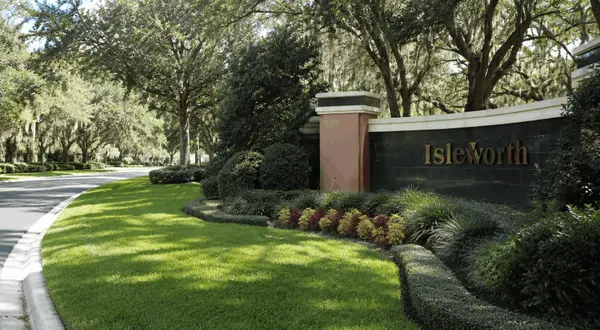
- Annual HOA: $1.2k–$13.5k (Isleworth)
- Annual CDD: None
- Employer Anchor: Disney, Universal
- Supply Level: Constrained ($3M+)
Lake Nona (Medical City)
- Median Price: ~$725K–$780K
- Annual HOA: $1.8k–$8.5k+
- Annual CDD: $1,500–$3,200+
- Employer Anchor: Medical City (3-5 min)
- Supply Level: Moderate
The decision hinge is commute and career trajectory. If your household is anchored to a role at Disney or Universal, a Windermere address pays long-term dividends in commute quality and estate appreciation. If one or both earners are at UCF Lake Nona Medical Center or AdventHealth, Lake Nona's 3-to-5-minute proximity is a structural advantage no Windermere address can replicate.
How Epic Universe Has Repriced Southwest Orlando
Universal's Epic Universe opened in May 2025, representing approximately $7 billion in capital investment and creating roughly 17,500 permanent operational positions. The effect on southwest Orlando real estate has been measurable: meaningful year-over-year home price support in the Horizon West and Windermere submarkets within the 30-minute commute radius.
The additional infrastructure signal worth tracking: Universal donated approximately 20 acres south of Epic Universe for the Catchlight Crossings workforce housing development. This 1,000-unit project is designed to house tourism and hospitality staff within a contained mixed-income development, which actively reduces pressure on neighboring luxury subdivisions to absorb workforce density through rezoning. For owners of single-family estates in Dr. Phillips and Windermere, Catchlight Crossings functions as a land-use buffer.
Commute Reality Check: What Navigation Apps Don't Show You
Standard navigation applications calculate optimal-condition travel time, not Central Florida weekday peak-hour reality. Here are the realistic numbers for the most common executive commute corridors in the luxury market:
Windermere to Downtown
Ideal: ~20 mins
Peak Rush (SR 408): 35–45 mins
Dr. Phillips to Disney
Ideal: ~10 mins
Peak Rush (CR 535): 20–25 mins
Horizon West to Universal
Ideal: ~20 mins
Peak Rush (SR 429): 35–40 mins
Winter Garden to Lake Nona
Ideal: ~35 mins
Peak Rush (SR 417): 50–60+ mins
The practical implication: Beltway proximity is a measurable pricing premium. Subdivisions within two miles of a beltway ramp consistently command higher per-square-foot values because they offer predictable commute durations — and at the executive-buyer level, predictability of time is weighted as heavily as square footage.
Closing Cost Reality: What You Will Pay in Orange County
Central Florida's closing cost customs differ from many other Florida markets. Reviewing exactly what property taxes and fees cost in Orlando keeps your financial expectations aligned.
- Deed documentary stamp tax: $0.70 per $100 of sale price — paid by the seller in Central Florida.
- Owner's title insurance: Promulgated rate of $5.75 per $1,000 (first $100k), $5.00 per $1,000 thereafter — paid by the seller.
- Mortgage documentary stamp tax: $0.35 per $100 of loan amount — paid by the buyer/borrower.
- Intangible tax on new mortgage: $0.20 per $100 of loan amount — paid by the buyer/borrower.
A note on custom negotiations: a seller from Central Florida and a buyer relocating from Miami-Dade County may have entirely different expectations about who covers the owner's title policy. Clarifying these customs in the initial offer avoids a last-minute collapse.
Evaluate Your Target Submarket
Ready to model your specific portability transfer, evaluate a community infrastructure bond liability, or review private carrier underwriting parameters before drafting a contract? Let's connect.
Direct Strategy Line: (917) 743-8865
Frequently Asked Questions
What is the insurance consequence for a roof older than 15 years in Orlando?
Once an asphalt shingle roof reaches 15 years of age, private Florida homeowners insurance carriers can flatly refuse to bind new policies or demand comprehensive roofing certifications showing at least 5 years of verified remaining structural lifespan. Transactions commonly collapse when underwriting discovers a roof past this threshold if a replacement concession has not been negotiated.
How does a CDD assessment impact total home carrying costs in newer communities?
Community Development Districts (CDDs) add a non-ad valorem tax lien directly onto the annual county tax bill, ranging from $1,500 to $4,500 annually in master-planned hubs like Horizon West and Lake Nona. This is entirely separate from standard private HOA dues and can alter a buyer's debt-to-income ratio right before closing if omitted from initial affordability projections.
What submarket elements insulate single-family values in Dr. Phillips?
Established subdivisions within Dr. Phillips maintain structural valuation insulation due to a complete absence of public infrastructure CDD bonds, low historical HOA overhead, and fixed attendance placement inside the stable Dr. Phillips High School boundary, which commands notable resale premiums over neighboring districts.
Yousef Zeidan
Luxury Right-Sizing, Downsizing, and Tax-Sensitive Relocation Specialist
Specializing in luxury right-sizing, downsizing, and tax-sensitive relocation in Dr. Phillips, Windermere, and the Butler Chain of Lakes.
- Brokerage: RE/MAX Prime Properties
- License ID: SL3520428
- Phone: +1 (917) 743-8865
- Email: yousef@floridalistings.io
- Office Address: 2713 St Armand Ct, Orlando, FL 32835, USA
Categories
Recent Posts



Request Your Confidential Risk Audit